Who gets designed in: Notes from the 2026 ASLA expo floor

Scott Roschi, creative director at Landscape Structures, spends his days thinking about how design, play and place come together to create experiences people remember. After attending the 2026 ASLA Conference on Landscape Architecture in Los Angeles, he shares what caught his attention on the expo floor—and what those observations might say about where playground design trends are headed.


I didn’t make it into a single education session at the 2026 ASLA Conference on Landscape Architecture in Los Angeles. I spent the conference on the expo floor, which turned out to be a good place to read where the profession is heading when it comes to playground design trends.

Designing play for more ages

The surprise this year was age range. ASLA has traditionally featured plenty of big play for 5- to 12-year-olds. This year, more manufacturers brought playground equipment designed for children ages 2 to 5, and there was more adult fitness equipment than I remember seeing at past shows. The floor covered more ages at both ends.

By the time Karlye Emerson, president and CEO of Landscape Structures, spoke at the Opening General Session at the end of the first day, I’d been seeing that shift for hours. One line of her remarks named it: “the places we create today will serve communities for years, even generations, to come.”

Serving more ages and serving them together are different design problems. The second one is what we took on with Smart Play® Volo Pico+™, our new playstructure designed specifically for toddlers and preschoolers ages 2 to 5, which we previewed at ASLA.

What parents and kids taught us about early childhood play

Before showcasing Volo Pico+ at ASLA, we put an early prototype in front of real parents and kids and watched where the design got in their way. Then we changed it.

We removed several barrier elements around the perimeter so a parent or caregiver can get to the LSI Flexx® net and steady a child without reaching over anything. We raised the shade so an adult can stand comfortably on the deck. When the same families came back for the second prototype review, they noticed.

So did one landscape architect at our booth.

Before anyone explained anything, he walked the playground structure and started pointing things out: the spots where a parent could step in and help, the net tying the whole structure together, the fact that it has no front or back, and a height that never felt intimidating even up close.

He has designed and specified plenty of playstructures himself, so he knew what he was looking at. As soon as he left, I found Tory Roff, principal designer on Volo Pico+, and told him it was like the landscape architect had been sitting in our design meetings. He’d covered nearly everything we talked through during design and testing, and he got all of it from the structure itself.

That’s what good design should do. You shouldn’t need someone standing beside it explaining why every decision was made.

Designing for generations, not just age groups

The die-cast car track got the biggest reaction of the week. Almost everyone who stopped had a story about the cars they played with as a kid and what it’s like to hand that experience down to their own children.

One dad told me his daughter plays with die-cast cars shaped like animals. She uses them completely differently than he ever did, building a world of her own, and he gets to watch.

That’s the generational play Karlye was talking about, told by the people living it.

The 2027 PLAY Book works on the same principle at project scale. Every project featured in it was created with a specific landscape architecture firm and a specific community, and the book names them. The playground isn’t treated as something dropped into a site. It is part of a larger vision for the place.
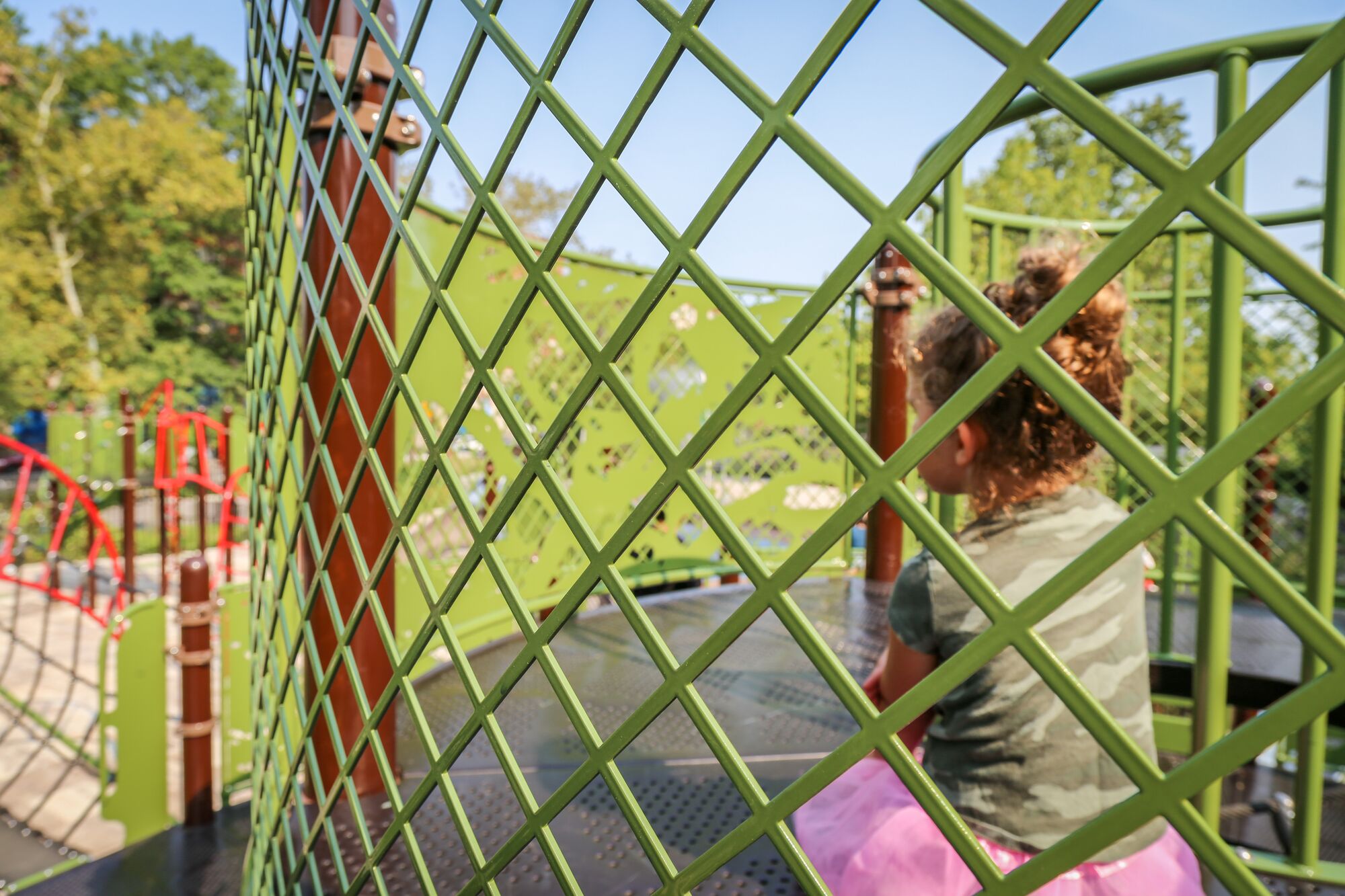
Aaron Skogen, general manager at Aquatix®, and Heidi Stengel, sales design manager at Aquatix, made a version of the same case for splash play in their ASLA Learning Lab presentation. Universal design isn’t about designing an experience for one group of people. Done well, it creates environments that work better for everyone who shows up.

What color trends tell us about design

Then there was the pink.

More of the industry is developing its own colors now, and that’s good to see. What caught me was how many site furnishings companies arrived with the same family of pink. It felt out of left field.

Hot pink was everywhere at the World Cup this summer, showing up on boots from nearly every footwear brand and standing in sharp contrast to the green field. That convergence had a reason.

At ASLA, I’m less sure what the reason was.

When a color shows up everywhere at once, I want to know where it started—and whether it started with anyone’s site.

Curiosity as a design method

Later in the week, I spent time at San Diego Design Week, and the thing that connected both events was curiosity.

Every landscape architect and designer I met at either one was doing what I was doing: watching for what’s next and figuring out how to use it on the next project.

That curiosity is also a method.

Volo Pico+ got better because someone watched a parent struggle to reach their child and went back to change the design. That observation became a different barrier, a higher shade and a better experience for the adults and children using the space together.

Playground design trends will change. Colors will change. The equipment on the expo floor will change. But the question worth carrying into the next project is more enduring:

Who gets designed in—and who might we be unintentionally designing out?

Play Grows With Us: Inside the Neighborhood Ninjas NinjaFit Grand Opening

On Aug. 22, teens and adults in Lee, Mass., found themselves climbing, swinging, reaching and occasionally falling short before getting right back up to try again thanks to a new outdoor fitness playground.

They had some expert help. American Ninja Warrior®, a registered trademark of Tokyo Broadcasting System Television, Inc., competitors Jessie Graff, Ginny McColl, Alyssa Beird and others were there to offer encouragement and coach attendees through the obstacles at the grand opening of the Neighborhood Ninjas NinjaFit Playground.

Community members cut the ribbon on the new outdoor fitness playground
Members of the Lee, Mass., community come together to cut the ribbon on the new Neighborhood Ninjas NinjaFit Playground

Neighborhood Ninjas is a nonprofit organization that uses the sport of American Ninja Warrior to help youth build active lifestyles, confidence, connection and resilience. The Lee playground is its second NinjaFit location, following the first in Wilmington, Del.
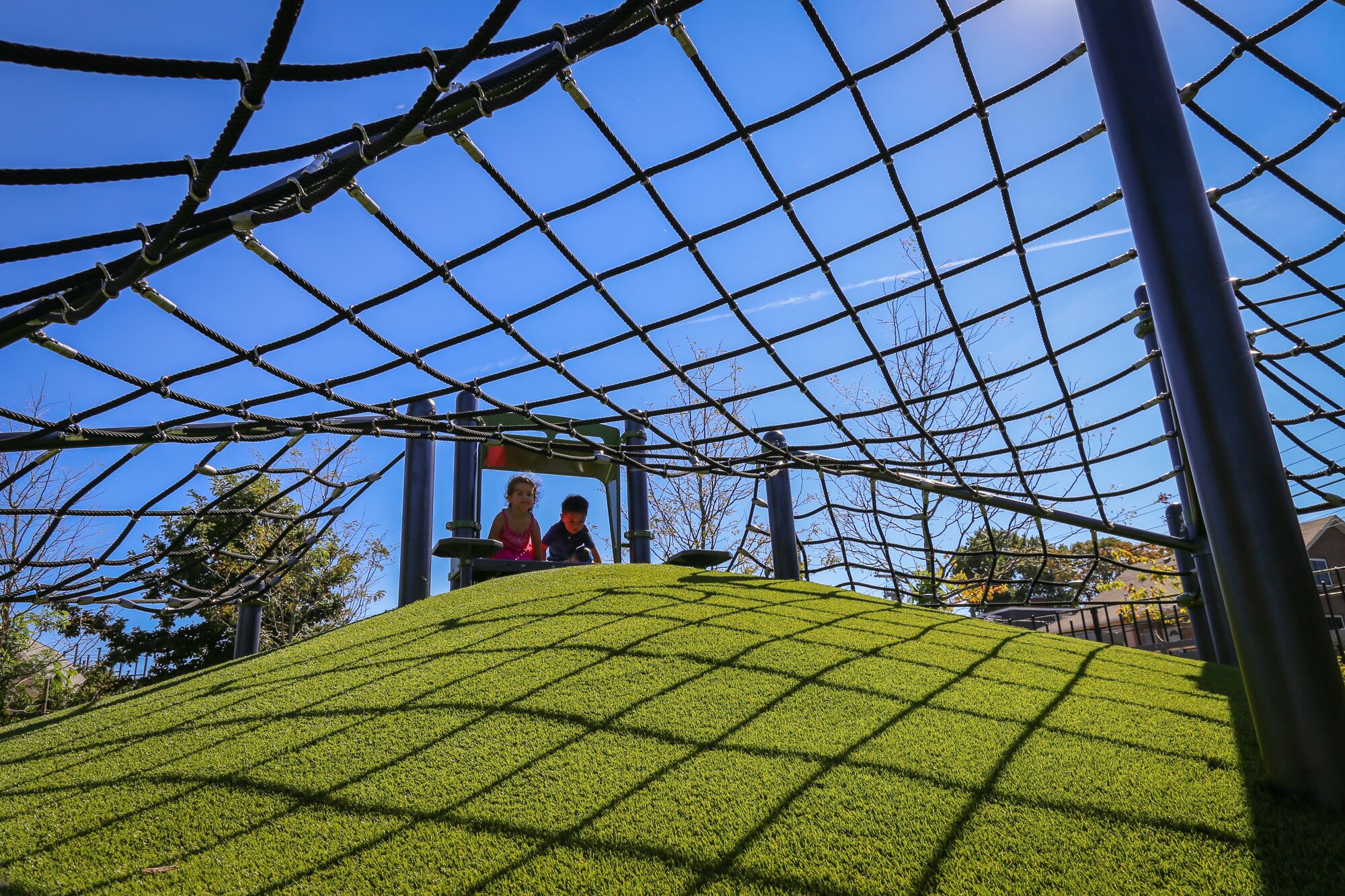
Nobody had to tell the adults to play. Give people an interesting enough challenge, and play happens naturally.

The new NinjaFit Playground, featuring Landscape Structures’ FitCore™ Extreme equipment for ages 13+, offers a reminder that playgrounds don’t have to be something we leave behind as we grow older.

We Don’t Outgrow Play

Play changes as we grow. The activities that captivate a preschooler aren’t necessarily going to capture the attention of a teenager. But the desire to challenge ourselves, connect with others and experience the satisfaction of accomplishing something difficult doesn’t disappear.

Maybe we don’t age out of play. Maybe the way we want to play simply evolves.

“Obstacles are a metaphor for life,” said Alex Katz, executive director of Neighborhood Ninjas and an American Ninja Warrior competitor. “We’re helping young adults get stronger, work on growth mindset and resilience, and learn how to overcome obstacles, not just on the course, but in real life, too.”

For teens and adults, play might involve physical challenge and perceived risk. It can mean competition one minute and cooperation the next. It’s trying, failing, laughing and trying again. And when movement feels like play rather than a prescribed workout, being active can simply be fun.

Designing for the Ages We Often Overlook

Traditional playgrounds provide important opportunities for children to move, explore and socialize. But as children enter their teenage years, there can be fewer spaces intentionally designed for the ways they want to gather and be active.
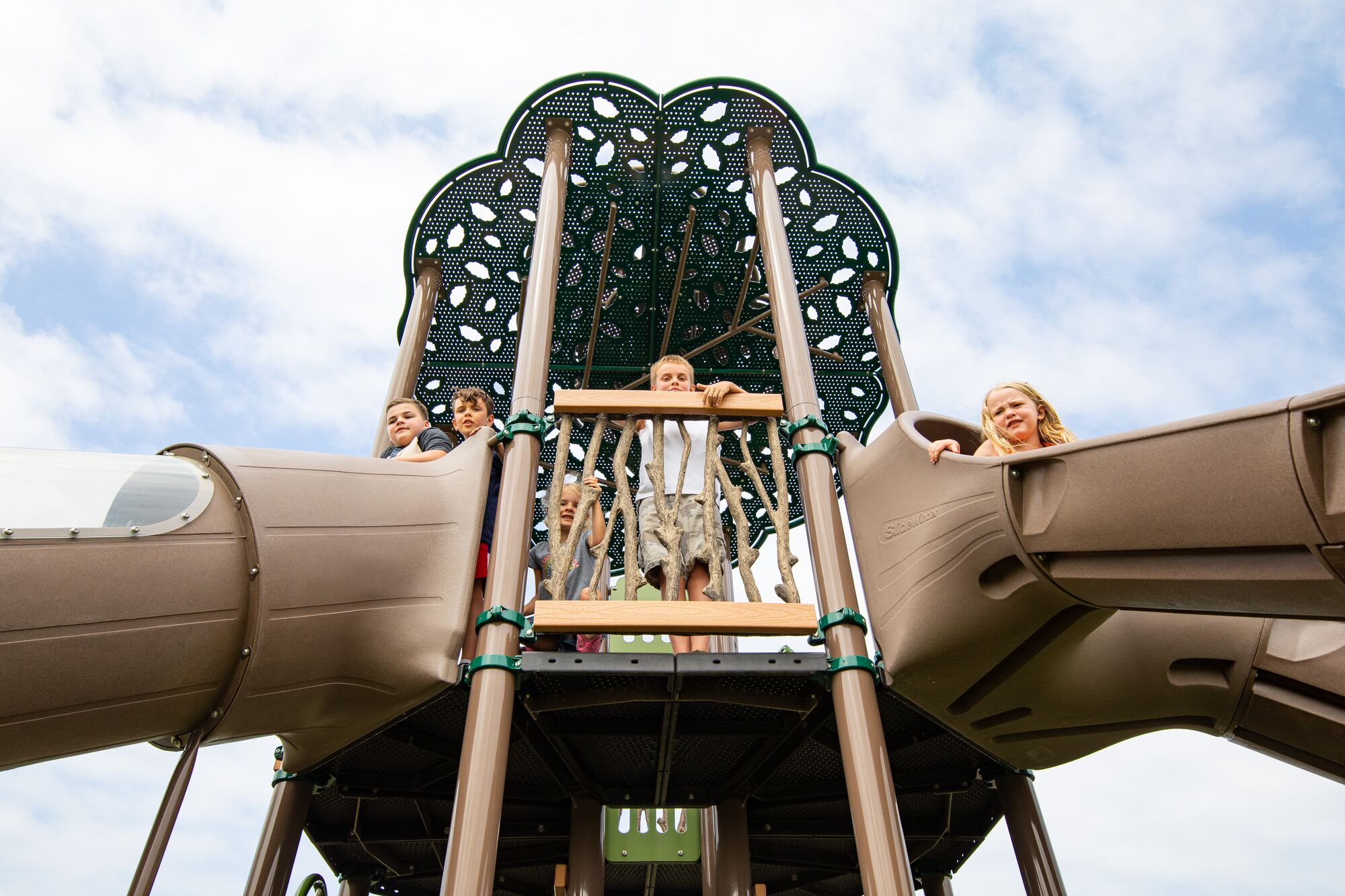
Teenage girls climb the FitCore Extreme Cargo Net, part of the newest outdoor fitness playground in Lee, Mass.
Teenage girls navigate the Cargo Net of the outdoor fitness playground

“Teens in Berkshire County are looking for spaces that they can be more social in, that help them become better members of society,” said Stacy Parsons, director of community engagement and juvenile diversion.

Designed for ages 13+, FitCore Extreme provides progressively challenging obstacles that encourage strength, agility, balance and coordination. Outdoor fitness playgrounds can make physical activity more accessible and engaging while providing opportunities for teens and adults to challenge their fitness.

They can also help parks serve the whole family.

“Many communities are searching for ways to create multigenerational spaces, and FitCore Extreme equipment allows for that,” said David Smith, senior vice president of sales at Landscape Structures. “Outdoor fitness equipment can be installed near a traditional playground so the entire family, including teen siblings and parents, can stay active while younger children play.”

Challenge Meets Community

That sense of connection was on full display during the NinjaFit grand opening.

The American Ninja Warrior competitors weren’t there simply to demonstrate what they could do. They coached attendees through obstacles, celebrated successes and encouraged people to try again when they didn’t quite make it.

It reflected something at the heart of ninja culture: Challenge may be individual, but overcoming it doesn’t have to be.

And sometimes the encouragement you need is simple.

“If I can do it, you can do it,” said Ginny McColl.

At 74, McColl knows something about refusing to put an age limit on challenge. The mother of Jessie Graff, McColl began her own strength journey at age 61.

“My motto is ‘strength is ageless,’” McColl said. “You’re never too old, and you’re never too late to start.”

Ginny McColl, 74-year-old American Ninja Warrior competitor, shares her motto for health with the grand opening crowd

After falling early in her first American Ninja Warrior competition, McColl remembers her daughter reminding her not to let one fall define her and instead recognize how far she had come.

It’s a lesson that works on and off the course.

Play at 3 might look like navigating a wiggly ladder, and at 8 it might mean climbing to the top of a playground tower. At 15, it might be racing a friend through an outdoor fitness playground. At 40, it could mean wondering whether you can still make it across the monkey bars.

And at 74? It might mean looking at the next obstacle and thinking, “Why not?”

Building Confidence Through The Outdoor Fitness Playground

Physical challenges can also create opportunities to practice persistence, problem-solving, confidence, healthy risk-taking and resilience.

Beird sees that connection from two perspectives, as both a ninja athlete and a teacher.

“Physical challenges are often easier for middle schoolers and teenagers to try versus a difficult subject in school,” she said. “If they can build their confidence completing these obstacles, they may have more confidence heading into the classroom.”

American Ninja Warriors pose in front of the new Neighborhood Ninjas outdoor fitness playground.
American Ninja Warrior competitors are ready to help Lee, Mass., take on the outdoor fitness playground

That’s what makes spaces like the NinjaFit Playground more than outdoor fitness equipment. They create opportunities to discover what our bodies can do, experience failure in a supportive environment and build the confidence to try again.

Katz hopes that spirit becomes part of the new playground’s identity. A year from now, she wants to see teens gathering, families challenging one another, people building confidence and strength, and community members encouraging each other.

Playgrounds don’t have to be places we leave behind as we grow up. By creating experiences that evolve with our abilities, interests and desire for challenge, we can invite more generations to keep moving and playing.

Because play is life-changing, no matter your age.

The magic of play

At Landscape Structures, we see connections made every day. Everywhere. This is the beauty of play. An extraordinary opportunity for interaction and imagination. Coordination and cooperation. Freedom and fun. Play lets us connect to who we are and see our wonder amplified in the connections we make. That’s why, in everything we do, we celebrate the beauty of play.

We are proud to lead the conversation about the power of play with our videos. Watch the trilogy of Shaped by Play below.

We Come Back to Play
Play Will Always Shape Us
For a Better Tomorrow, We Play Today

The beauty of play is that it’s not just play at all. It’s magic. An opportunity to make connections.

Most importantly, share the magic of play with your community by contacting your local Landscape Structures playground consultant to get started on your upcoming playground designs today.

It’s still true… Design Matters. Play Matters More.

Request your 2022 PLAY Book

Our approach to design and play hasn’t changed. And that means everything keeps changing. It’s why designers discover ingenious ways to create new, innovative landscape environments. Together, we’ll create environments to be newly fresh and exciting upon every visit. Because that’s what creates return visitors to our playgrounds… and our 2022 PLAY Book. By design.

We build unique play value into each design. The result is layers of possibility, the development of new skills and an opportunity to evolve with children’s changing needs. See all the unique designs of the PLAY Book in action below.

Find inspiration for your next wondrously kid-centric world by browsing and requesting a copy of the 2022 PLAY Book. Then contact your local Landscape Structures playground consultant to design the preferred destination of families in your community and beyond.

Design Matters. Play Matters More.

For us, design refers to what a playstructure looks like as much as it does to the play value built into it. We simply cannot design one without the other. Play value is what creates return visitors. That’s why we design play environments to be fresh and exciting upon every visit. Go here to view and request a copy of the 2021 PLAY Book.

Deliver a hive of activity that sparks the imagination, facilitates discovery and lends itself to new adventure. See a few of the signature playground designs from our 2021 PLAY Book in action below.

Turn your destination playground into a legend. By design. Contact your local Landscape Structures playground consultant to get started on your next playground design.

Play Will Always Shape Us

[youtube https://www.youtube.com/watch?v=tvBsHikZcRg]

Play is powerful. It instills important values like leadership, perseverance and cooperation in kids. That’s why we design playgrounds that add value to kids’ experiences, and bring individuals of all ages and abilities together for play. Play is everything, and no matter our age, we come back to what we know… Play will always shape us.

We are proud to lead the conversation about the power of play with this video, and want to help you lead the conversation in your communities. Request a download of our Video Discussion Guide here.

Help us spread the important message heard in this video by sharing it with your family, friends and colleagues on social media. And be sure to tell us how play has shaped your life using #shapedbyplay.

Let your imagination soar

2018 PLAY Book

Is your head in the clouds when it comes to unique design?

Perfect. We can help you shape sky-high visions into just-right solutions.

From playful post toppers to concrete-sculpted climbers and colorful palettes to DigiFuse® panels, we can help you turn sky-high ideas into amazing realities. Let’s collaborate.

Request your copy of the 2018 PLAY Book, or browse the virtual PLAY Book. And to see these amazing playground designs in action, watch our video below.

[youtube https://www.youtube.com/watch?v=_XlEBFdMA-c]

Safety is our top priority

Kids are always finding new and inventive ways to play on or around playground equipment. And while they may scrape an elbow or bruise a shin, it’s important to take steps to eliminate the risk of more serious mishaps. We make playground safety a top priority, and we’ll help you keep kids safe with our age-appropriate commercial playground equipment:

We have commercial playground equipment to meet the needs of all age groups.

  • With the infant slide, appropriately sized climbers and other playground equipment designed for 6- to 23-month-olds, infants and toddlers gain strength, stability and motor skills, along with a host of other physical and cognitive skills.
  • Preschoolers are developing physical play and are thinking more creatively. We have many playground designs that offer age-appropriate play elements that test motor skills, strength and agility of kids ages 2 to 5.
  • School-aged kids need physical and mental challenges while they play. Our commercial playground equipment for 5- to 12-year-olds help them develop balance, coordination, muscle endurance, problem-solving skills, social skills and much more.
  • Even kids in middle school love to stay active through play. We offer a wide variety of playground activities that meet the needs of this group to keep them engaged and challenged. From Aeronet® Climbers to Skatewave® Skatepark equipment and the HealthBeat® Outdoor Fitness System, you’ll find choices that this hard-to-please age group will love.

Keep kids safe on the playground with safety surfacing and playground shade.

Even more, our playground safety surfacing will help keep kids safe from falls and our CoolToppers® shade systems will help protect them from harmful UV rays. Learn more about our commitment to playground safety at playlsi.com.

Creating more excitement with playground colors

When it comes to playgrounds, color is just as important to a child’s learning environment as the play structure itself. To create a sensory-rich playground environment for children, we spent the past year researching outdoor environments and working with chemists to create color formulas in nature-inspired hues and tones. The new colors—Berry, Buttercup, Carbon, Grass, Lagoon, Paprika, Peacock and Sky—are designed to enhance a child’s play experience.

Nature-inspired playground colors

The benefits of these innovative colors are numerous:

  • Nature-inspired colors allow children to engage in a playground design that creates a calming experience. This is because tones that reflect the outdoors are familiar to children. For example, we wanted the tone Buttercup to relay the feeling of playing a field of flowers.
  • Unlike the average toy, which is meant to drive visually loud experiences, natured-inspired playground colors help children focus. This is particularly beneficial for children with sensory processing disorders who often seek soothing environments, and the tones Sky and Peacock are meant to replicate the calming sense of sky gazing or playing in a garden.
  • Our new color line intentionally adds a metallic fleck to a matte finish for a richer finish that creates texture and offers a tactile play experience.

Harry Thomas Sr. Playspace

Learn more about our color inspirations and our overall design philosophy at playlsi.com. And tell us here how you use color to create additional dimension in your designs.

Celebrating landscape architecture throughout April

In addition to being Autism Awareness Month, this April has also been designated as World Landscape Architecture Month. The month-long event celebrates landscape architecture and the work its professionals do to design public and private spaces.

World Landscape Architecture Month 2015

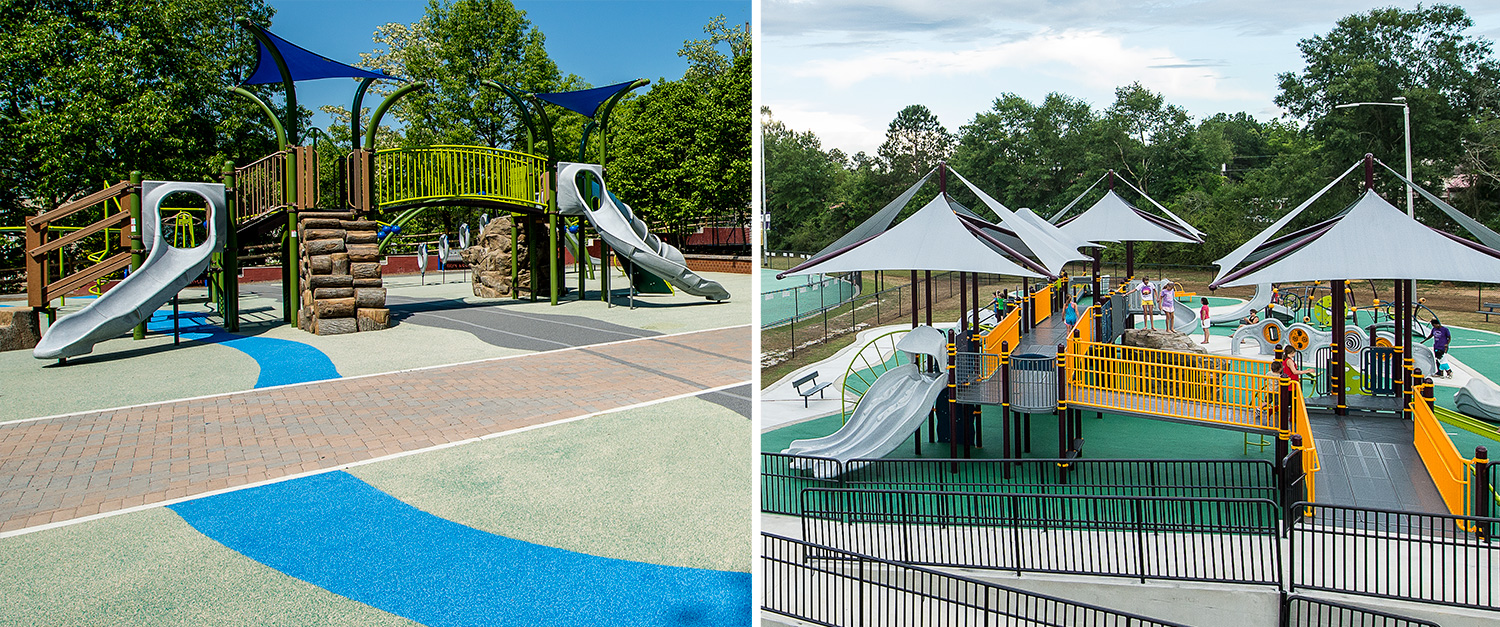
We’re proud to be able to work with landscape architects to create innovative playground designs. Whether it’s a curvy, sprawling design of playground nets, an environment that teaches kids about the history of their community, or a themed playground that sends kids on an adventure in their imagination, playgrounds designed by landscape architects become spaces that welcome individuals of all ages, abilities and cultures.

Summit Park, Blue Ash, Ohio

We love the result of collaborating with landscape architects, but their designs go way beyond parks and playgrounds. See projects “Designed By A Landscape Architect” by following #wlam2015 on social media, then visit asla.org to learn more about World Landscape Architecture Month and the landscape architecture profession.