Guest Blog: City Parks Create Important Foundation for Youth

martin-luther-king-playground-banner

We are proud to be members of the City Parks Alliance, which supports the creation, revitalization and sustainability of urban parks and green spaces. Today, we’re happy to have Catherine Nagel, executive director at the City Parks Alliance, as our guest blogger discussing Greater & Greener 2017, which is being hosted in the Twin Cities July 29 through Aug. 2.

As more people are moving back to urban areas, the importance of close-to-home parks is increasing–perhaps most for children. For those who don’t have a backyard to play in, the local park serves myriad functions: a portal to experiencing the natural world, a community hub where families and neighbors get to know each other, and a place for outdoor learning to help build skills of all kinds through organized activities. But beyond their role in recreation and social well-being, city parks also help grow local economies, create new transportation options, combat crime, and reduce environmental impacts such as storm water runoff. Urban planners, elected officials and community advocates recognize these benefits and are taking a fresh look at parks as an important part of civic infrastructure.

Print

Engaging youth in the outdoors can unleash their curiosity about nature, build confidence, and strengthen leadership skills, ultimately supporting careers in the sciences, recreation, conservation and elsewhere. Urban parks and park and recreation agencies are rich with opportunity to empower youth and help them succeed. At Greater & Greener 2017, our International Urban Parks Conference, we have created an entire track dedicated to the Parks and Youth Development. Speakers will focus on parks and programs that are providing close-to-home camping experiences, supporting new kinds of outdoor recreation, building literacy, strengthening advocacy around environmental and social change, and offering “green” job training and employment in the parks and recreation profession and related fields.

To help Greater & Greener, hosted by the Twin Cities of Saint Paul and Minneapolis, have a lasting impact beyond the sessions and knowledge sharing, Landscape Structures is sponsoring a Playground Build Volunteer Day to help kick off the conference. The brand new playstructure will be built in Central Village Park in Saint Paul, Minn., giving the community a place to recreate, socialize, and for the youth in the community to be #shapedbyplay!
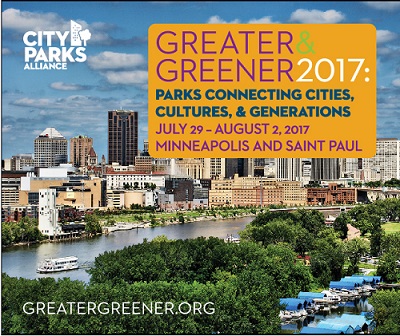
CPA_resizedLandscape Structures is also sponsoring The Mayors Forum at Greater & Greener, which will explore with city leaders what it means to create equitable cities and what role public spaces play in building inclusive, vibrant, and sustainable communities. Speakers include: Minneapolis Mayor Betsy Hodges, Saint Paul Mayor Chris Coleman, and Tacoma Mayor Marilyn Strickland. Next City’s President, CEO and Publisher Tom Dallessio will moderate.

Urban parks are dynamic institutions that play a vital role in the social, economic and physical well-being of America’s cities and their residents. The full benefits of parks in urban communities are only now being fully understood and measured. For most Americans, their closest park is a city park, and city parks provide an essential foundation that supports the next generation to grow and thrive–from childhood to adulthood.
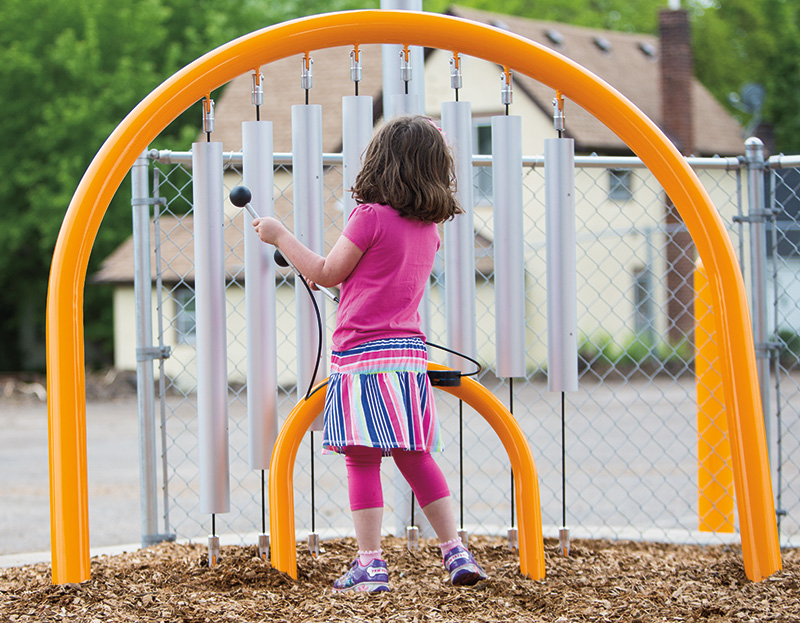
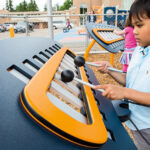
Now welcoming preschoolers to join the band

WarbleGirl-blog

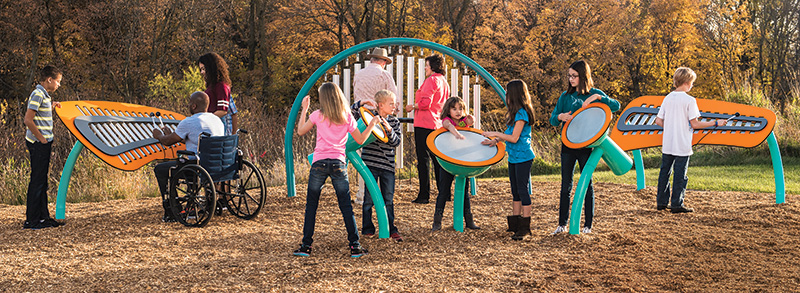
The joy of making music on the playground can now be enjoyed at any age. We’ve expanded the collection of Rhapsody® Outdoor Musical Instruments with six instruments that are a bit smaller and lower to the ground—sized just right for kids ages 2 to 5.

Rhapsody was originally introduced in January 2016, and has been a hit at playgrounds, community centers, schools, senior centers and more. That’s why we’ve added the junior Rhapsody instruments to the mix. This music playground activity is now ideal for
childcare centers, preschools and other early childhood facilities.

See below to learn more about the new junior-sized chimes, metallophones and drums:

Don’t forget… musical playgrounds welcome all ages and abilities! The original Rhapsody Outdoor Musical Instruments are perfect for kids and adults ages 5 and up. Add all 12 instruments to your play space to encourage multigenerational play.

Rhapsody_5to12-blog

Mankato Downtown Kiwanis to create inclusive playground with Legacy of Play award

Legacy-of-Play-blog

A fourth grader who uses a wheelchair will soon get to play on the playground with her friends. Her story helped convinced a panel of judges to award the Mankato Downtown Kiwanis Club $25,000 worth of inclusive playground equipment in the Legacy of Play Contest, sponsored by Landscape Structures Inc. and Kiwanis International. The award will be used to develop the Fallenstein Playground, an all-inclusive playground where children and families of all abilities can develop, discover, laugh and experience the joy of play.

Mankato, 75 miles southwest of Minneapolis, is renowned for its great parks and trails, and offers breathtaking landscapes of rivers, lakes, ravines, bluffs, natural prairies and forested areas. With a population of nearly 41,000, Mankato offers small town living in a thriving regional center. The all-inclusive Fallenstein Playground will be located adjacent to Fallenstein Field, the fully accessible baseball field used by the Miracle League of North Mankato, in Caswell Park.

mankato-park-blog

The Mankato Downtown Kiwanis Club will complete its inclusive playground project on or around Kiwanis One Day in October 2018. Learn more about the project.

Summertime safety

ShadeBlog05

Summer is synonymous with outdoor fun. As the weather warms up and trips to the park and playground become more frequent, take steps to keep your children safe from the sun and heat.

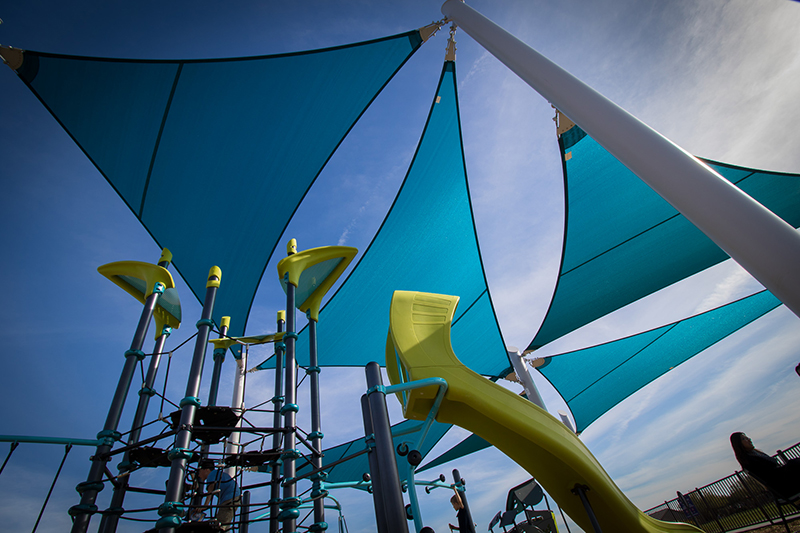
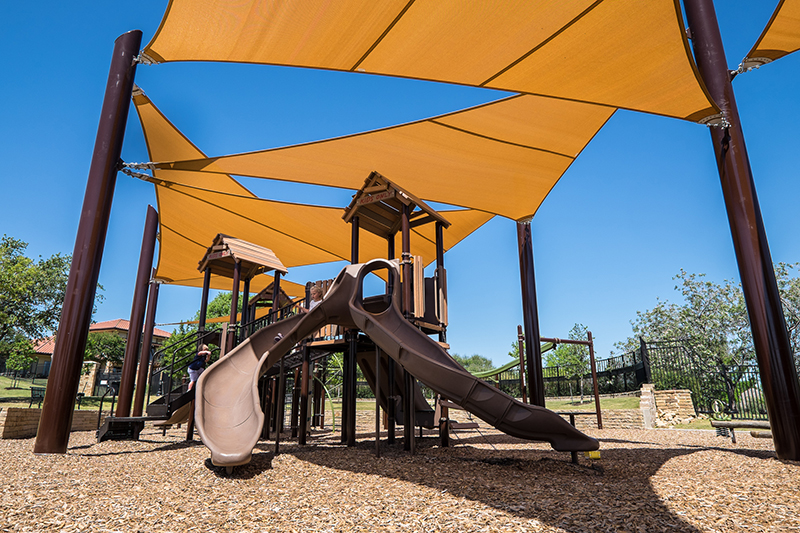
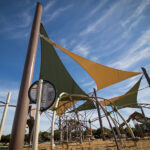
Sunscreen in addition to lightweight clothing and a sun hat help protect against UVA and UVB rays. However, the best line of defense is by staying in the shade. When planning trips to the park, choose commercial playgrounds that integrate shade into the design. Our shade systems–SkyWays® and CoolToppers®–are designed to block up to 97 percent of the sun’s harmful UV rays.

ShadeBlog02

During physical play at the playground, kids should have water available and should take a break regularly to stay hydrated. Our playground shade systems will also combat summer heat by keeping temperatures up to 30-degrees cooler. We even offer a shade option with a cool misting feature to help keep kids cool during the steamiest of play days.
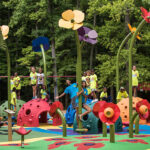
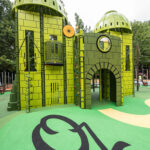
In addition to providing protection from the summer sun and heat, the SkyWays and CoolToppers shade systems deliver a beautiful aesthetic to park, playground and recreation areas. Whether your goal is to shade a playground, dog park, pickleball courts or something entirely unique to your community, we have shade solutions to meet your needs. Contact us to learn more.

For a better tomorrow, we play today

[youtube https://www.youtube.com/watch?v=3878sEXPuVE]We don’t just manufacture playgrounds at Landscape Structures. What we do here is shape kids’ lives… their futures. It has been more than 45 years since we’ve opened our doors and we continue to invest our hearts and souls into our work. Sometimes it’s hard to find the right words to explain why we do what we do. But this video captures exactly what gets us out of bed every day… why we create the best playgrounds in the world: for a better tomorrow, we play today.

Share our video and use #shapedbyplay to tell us how play has shaped your life or how you’re helping to shape lives through play. Then go to shapedbyplay.com to learn more.

Case Study: Honoring a life cut short

madisonoverall

Client: Madison Claire Foundation, Woodbury, Minn.

Designers: Gabriel Cotten, Landscape Structures playground designer

Goal: After the loss of their daughter, Madison, Dana and Dave Millington wanted to create an inclusive playground to honor Madison’s short life while also delivering a space for families of all abilities to gather and experience “normal” activities.

Solution: After getting input from the rehabilitation team at the University of Minnesota Masonic Children’s Hospital and talking to parents of children with disabilities, Dana and the Madison Claire Foundation’s Board of Directors broadened their idea of inclusive play to account for as many different situations as possible.

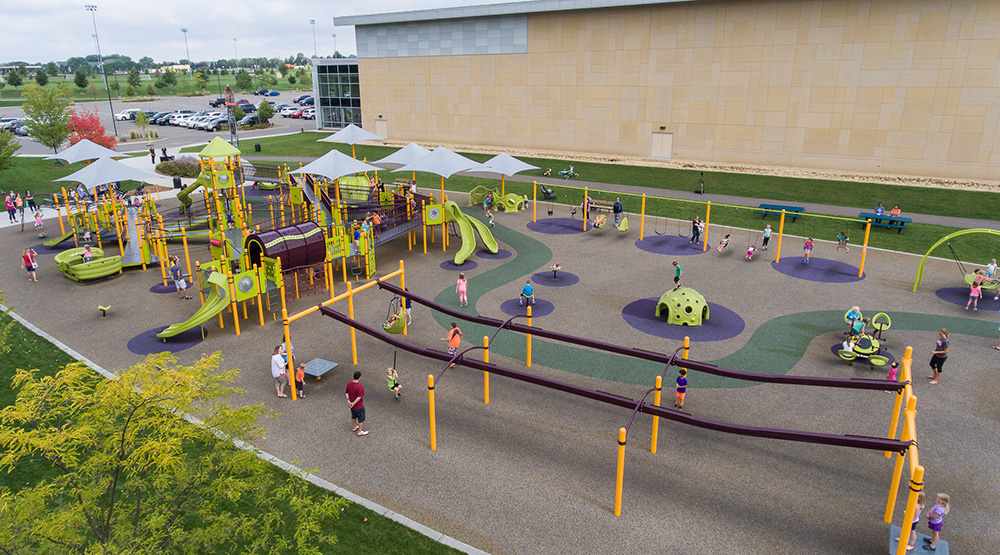
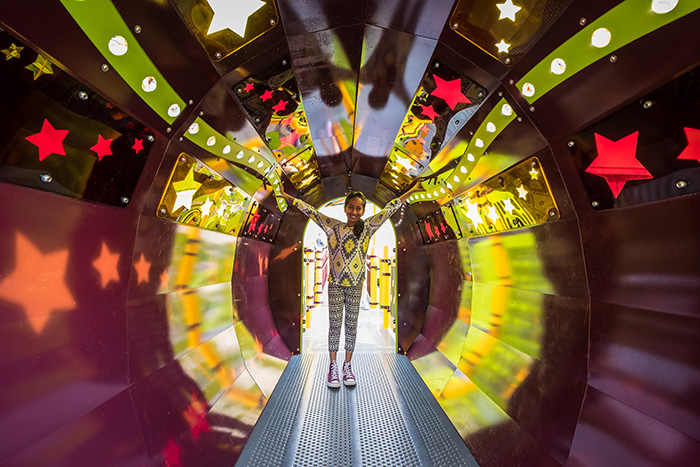
The inclusive playground design is fully ramped and includes many sensory-stimulating activities including a double ZipKrooz®, Sway Fun® glider, Cozy Dome®, We-saw™, Sensory Play Center®, OmniSpin® spinner, Roller Table and Oodle® Swing. Even more, there is a custom sensory tunnel, which is the highlight of the inclusive play design. The plum tunnel, with its star cutouts and marbles, invites intrigued visitors to step inside. Once inside, it’s a kaleidoscope of light and colors as the movement of the sun casts colorful stars on the opposite wall.

tunnel_inside

Read more about how Madison’s Place has created a space for families to create lasting and happy memories.

Case Study: Creating lasting relationships with play and recreation

Jonesboro_Overall

Client: City of Jonesboro Parks & Recreation Department

Designers: Sheri Seminary, playground designer at Landscape Structures Inc.

Goal: Create a Miracle League recreation complex that could act as a showcase for all other Miracle Leagues

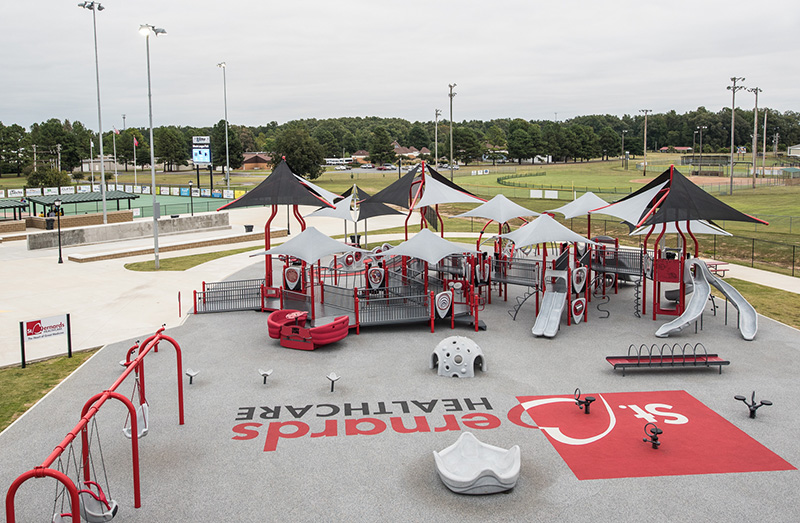
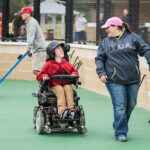
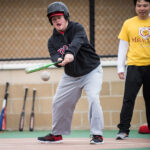
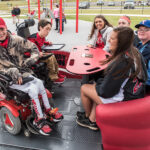
Solution: Their vision came to life as a 20-acre recreation complex complete with a rubberized ball field for children and adults with special needs, an inclusive playground, a concession stand, restrooms and a quiet room designed especially for children with autism. The inclusive playground focuses on access and offering sensory-stimulating activities including the Sensory Play Center®, OmniSpin® spinner, Roller Table, We-Saw™ and Sway Fun® glider. Even more, the playground integrates lots of shade right into the playstructure.

Read more about how the City of Jonesboro brought their community together through inclusive recreation at the Jonesboro Miracle League Park.

Guest Blog: Inspiring creative play among kids

Venti_Blog

In 2016, we introduced Smart Play®: Venti™, a smartly designed playstructure that packs 20 exciting activities into its compact size. Today, we’re happy to have Tory Roff, concept designer at Landscape Structures, as our guest blogger discussing how he and the product development team created the newest addition to our Smart Play line of playstructures.

The idea for the Smart Play line of playstructures was more an ethos about playgrounds as a whole… about creating a cohesive play environment. The criteria for this playground solution was a small footprint and budget, but a desire to serve a large population. So, we started with a blank slate without any rules, and asked ourselves how to design an environment that invites a dynamic play experience.

Birchview01_blog

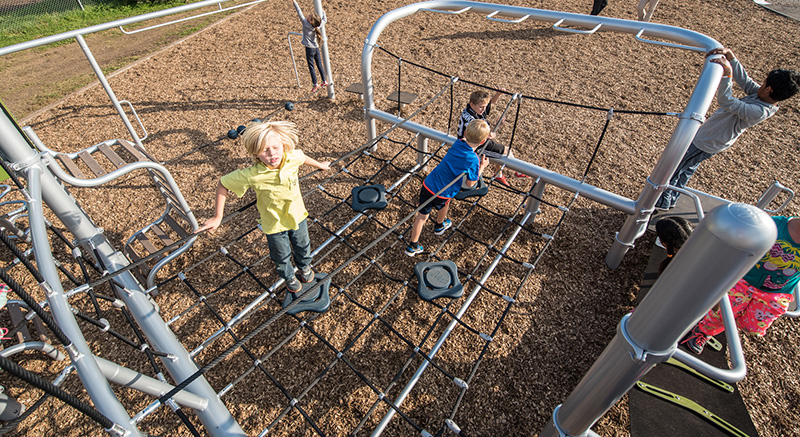
The design started with the Cargo Net and strategically set the height of it so there is room for play underneath, allowing it to work as a trampoline above and it also acts as a hub for the rest of the play space. We built out from there in respect to circuits and routes so there are different ways to engage the whole of the system. Graduated challenge is built into Smart Play: Venti so that kids with a higher skill level can find challenges and still have a way to invent from it.

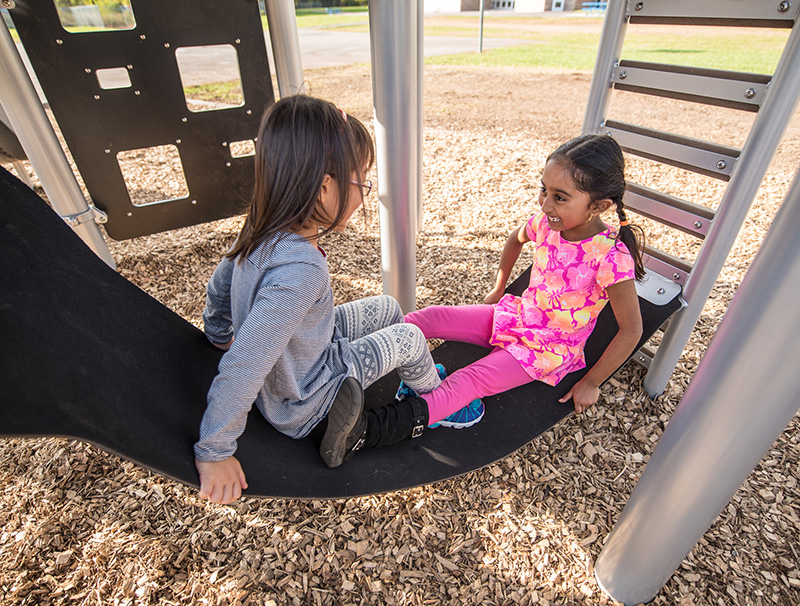
We spent a lot of time in the model space—virtual and scale models—working out the dimensions of the structure to really understand how every piece could be doing more. In modular playgrounds, a fire pole is always a fire pole. But good design considers what programming is happening around the fire pole so that kids can create another route and link two events as a cohesive experience rather than a series of segmented happenings. And that’s what’s happening with Smart Play: Venti. The Cabin Climber is an interior club house and an exterior ladder. The pods on the Cargo Net are a way-finding option through the structure, but also a place to stop and hang out. The Belt Hammock is a space for lounging, but also an escape route—it’s not big, it’s not obvious, but it is there.

Birchview03_blog

I was able to talk with students at Birchview Elementary School while they played, and they talked about their friend, Michael, who uses a mobility device. They were excited that he can actually use this equipment, and how it’s his favorite on the playground. Because the design is less scripted, there’s less expectation of how a user actually engages it. Smart Play: Venti allows for more natural inclusion through the addition of many access points and a centralized hangout location, which was one of our primary goals during the design process.

There is enough variety of activities in the playstructure so that kids feel like they can fill in the blank however they want. As designers, we had ideas and hopes of how everything would play out. But you have to engage it from a place of humility and know that there isn’t such a thing as intended use. Kids are infinitely more creative than we are, so it’s important that we give them a platform to express that.

Case Study: Teaching kids as they play

OverallWatkins

Client: Maryland-National Capital Park and Planning Commission (MNCPPC), Upper Marlboro, Md.

Designers: Brenda Iraola, landscape architect supervisor; Chris Colvin, landscape architect; and Rene Albacete, landscape architect

Book_DGI

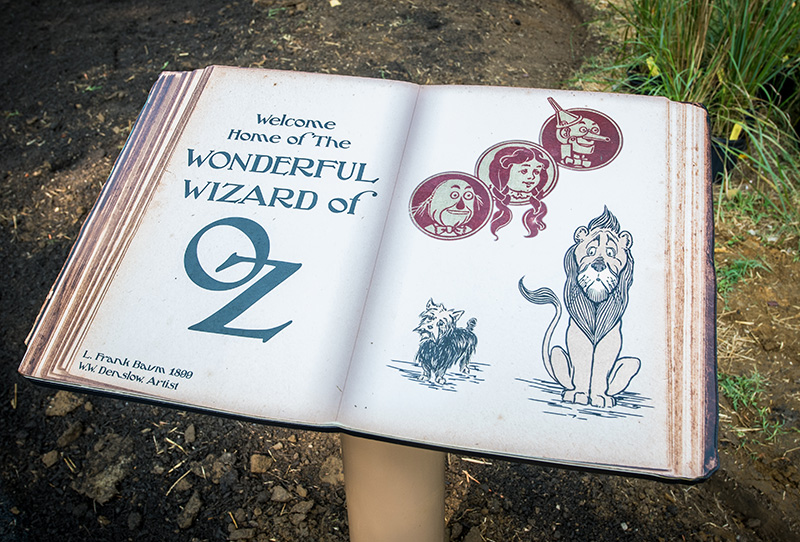
Goal: Create a storybook playground design for Watkins Regional Park based on the original Oz storybook to encourage learning through play

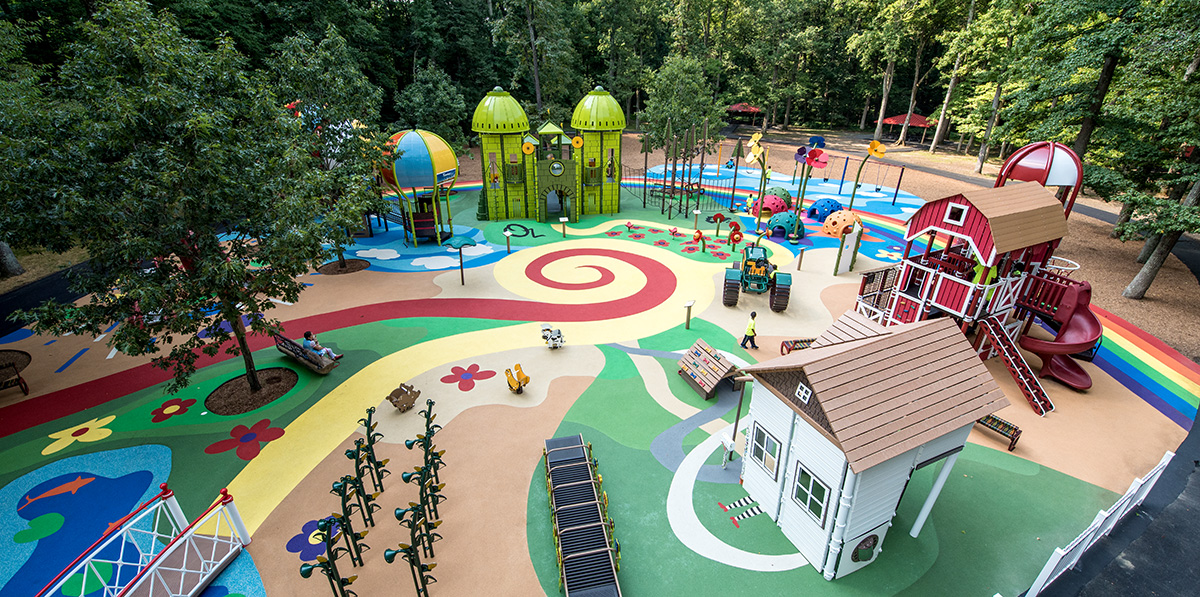
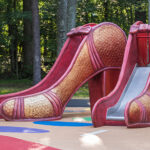
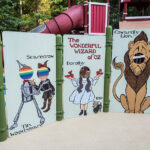
Solution: Kids and families can experience Auntie Em and Uncle Henry’s Kansas farm, Dorothy’s house, Munchkin Land, the poppy field, the Emerald City and Dorothy’s attempt to get home via hot air balloon. Even more, Dorothy’s ruby slippers were adapted to be playground slides! The design also includes a unique experience for the children to become the characters of the storybook. Brenda and her team used play panels containing graphics of the drawn storybook characters—Dorothy and Toto, the Cowardly Lion, Tin Woodsman and the Scarecrow—with cut-outs for children’s faces to allow them to become a part of the story.

Read more about how the Wizard of Oz-themed playground at Watkins Regional Park has become the main attraction for visitors all over Maryland, Virginia and Washington, D.C.

Guest Blog: Project-based learning leads to new playground design

In 2015, we collaborated with Lausanne Collegiate School in Memphis, Tenn., to design a world-themed playground. Today, we’re happy to have Kara Barbour, head of lower school, as our guest blogger discussing how the school brought students into the playground planning process through their project-based curriculum.

Lausanne-blog

At Lausanne Collegiate School, the Lower School (PK-4) engages in a daily block of project work. Each Lower School classroom is in charge of three projects throughout the year, dedicating six to eight weeks to each project. Our goal with this project-based learning was to get students asking questions and researching a particular topic.

The third grade classrooms are focused on inventions projects, during which they start to investigate how things are made, hear from entrepreneurs, etc. The students work in groups of three to four to come up with an invention, and then they go to the idea labs to start sketching things out and building prototypes to determine if their idea will work.

When we decided that we were going to install a new playground, we really wanted to get the students involved and decided the third graders and their inventions unit would be a perfect fit. Each of the small groups put together a proposal, and so many of their ideas were actually things that Landscape Structures had already started working on.

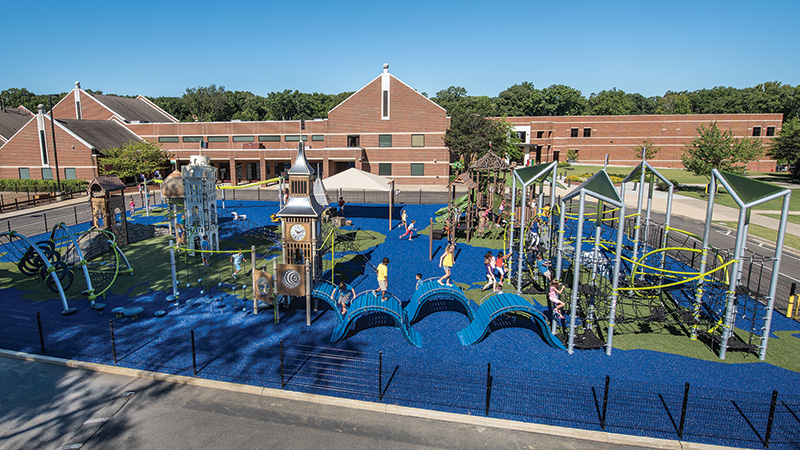
We first revealed the playground drawings to the third graders. They squealed with delight to see their ideas turned into reality. We then gave them the opportunity to share the drawings with the rest of the school during a student assembly, and even had a few students share the plans with the parent group. The third graders feel that the playground came to be because of the work that they did.

The playground opened in August 2015, just before school began, and the third graders took part in the official ribbon cutting. All of the students at Lausanne love the new playground—even fifth graders are attracted by it. It’s been quite the magnet for the entire community.