Inclusion in Ecuador

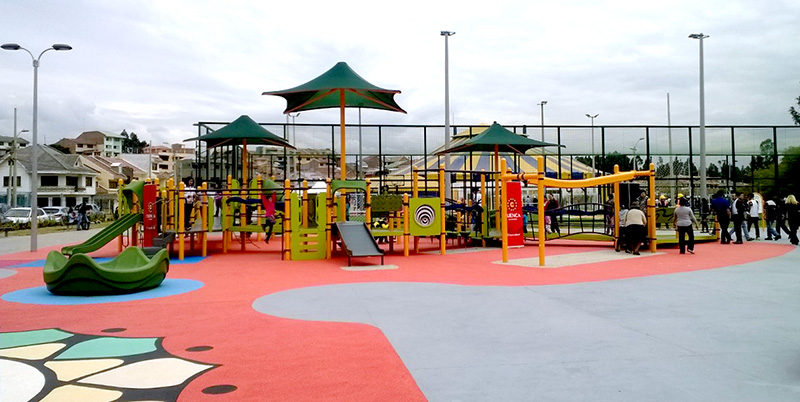
Cuenca, Ecuador, is home to the first inclusive playground in the entire country!

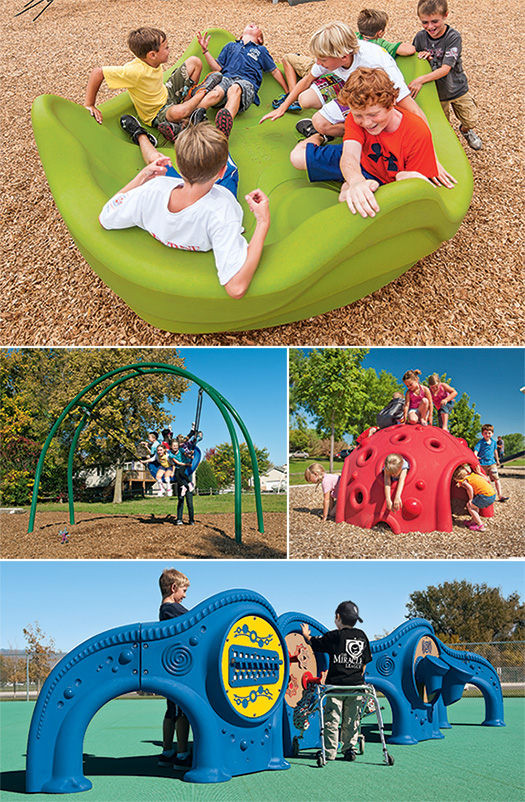
As we mentioned last month, our partnership with Shane’s Inspiration helped us bring the first inclusive playground to Ecuador! On Friday, Nov. 22, Paúl Granda López, Mayor of Cuenca, our president, Pat Faust, and the team from Shane’s Inspiration celebrated the grand opening of the 8,880 square-foot inclusive playground. The event welcomed more than 200 children of all abilities, many who were experiencing swinging and playgrounds for the very first time in their lives!

Former Vice President Lenin Moreno, an extraordinary champion for the rights of people with disabilities, initiated the concept of the inclusive playground, inspired by his own personal journey as a paraplegic and his discovery of the healing power of laughter and play therapy.

Read more about the inclusive playground in Cuenca as well as the social inclusion workshop that Shane’s Inspiration held for more than 80 university students majoring in special education.

Guest Blog: Designing a truly inclusive playground

In June, we awarded the Iola Kiwanis club in Iola, Kan., $25,000 in playground equipment as part of the Make a Difference Through Play contest. Since winning, they’ve been busy with plans, and we’re happy to share another update from Michael Ford, member of Iola Kiwanis and community resource officer for the Iola Police Department.

When our playground consultant from ATHCO, LLC visited with us to discuss the inclusive playground design, five representatives from the M.O.M.S. group were at the meeting along with the school’s physical therapist and a couple of Kiwanis members. We all paged through the Landscape Structures catalog—the moms focused on products that might specifically help their kids—and the rest of us picked out items that we thought we be fun for all kids.

The Marble Panel™, Xylofun Panel® and Bongo Panel all provide sensory-rich experiences for kids.

L to R: Marble Panel™, Xylofun Panel® and Bongo Panel

Some of the moms focused on including sensory panels because they figured that even though their children might not have a lot of muscle strength to climb or hang from overhead events, they can still participate and have fun. And I don’t know what kid isn’t going to enjoy beating on Bongo Drums or playing on a Xylophone, which is what some of the panels included. Another popular item was the Marble Panel™, which one mom whose child with vision problems picked out. The light shines through the marbles to engage kids’ sight, plus it offers a unique tactile experience.

As a parent of kids without special needs, I never thought about sensory items as part of the playground, but now I see that it’s very important. And it’s important for the development of all kids. That, to me, is how we’re providing a truly inclusive play space.

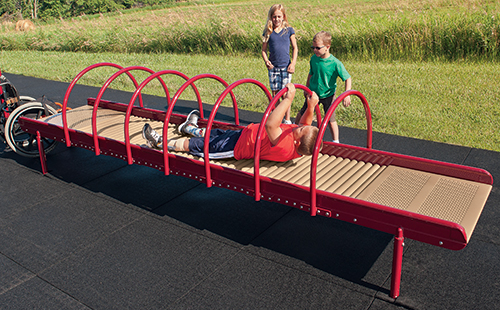
The Roller Table provides a unique sensory experience with its deep muscle pressure.

Roller Table™

While the moms focused on sensory-rich activities, the physical therapist thought more about what kids—with and without special needs—need for building strength. She chose climbers that would engage kids’ full bodies. And she thought the Roller Table™ would be great for kids that don’t have any lower body strength, as they can lie down and pull themselves through.

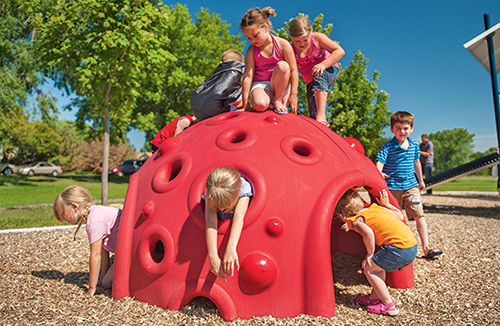
The design process has been very educational for us. The Cozy Dome®, which I just looked at as a fort or climber, can also be beneficial for children with autism to use as a “time-out” space if they get overstimulated. It was quite the learning experience to look at these playground products from a different point of view.

The Cozy Dome® offers kids a place to escape the hustle and bustle of a busy playground, take time by themselves or socialize together.

Cozy Dome®

After that first meeting, our playground consultant came back with a design that we all liked. The design is final; however, if we exceed our fundraising goal we’d love to add more inclusive playground pieces to the design.

Stay tuned for another update from Michael next month. He’ll talk more about the importance of inclusive play to the community of Iola.

Laying the foundation for change

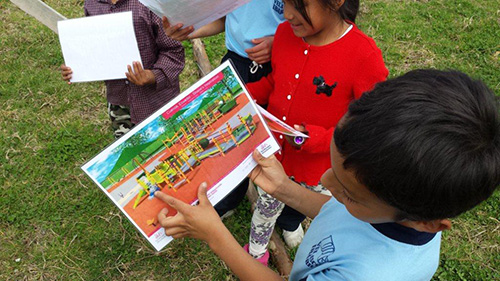
Kids in Cuenca, Ecuador, point out what they're most excited for in the inclusive playground.

Our partnership with Shane’s Inspiration, a non-profit organization dedicated to improving the lives of children with disabilities, has allowed us to positively impact many children, families and entire communities. And we’re excited to say that our partnership is helping bring inclusive play to Ecuador! In a matter of weeks, the Municipality of Cuenca will open its first inclusive playground (the first in the entire country!), which will help promote integration among children of all abilities.

Learn more about the project and see a few in-progress photos from our friends at Shane’s Inspiration.

The five key benefits of sensory play

Did you know that October is Sensory Awareness Month? It is, and on this last day of the month, we wanted to share the benefits that children of all abilities get from sensory play. Sensory play involves activities that help to stimulate and develop behaviors based on what a child sees, hears, touches, tastes and smells. It also involves how they move and position their bodies in space. The more they engage all seven senses, the better they make sense of the world around them and their relationship to it.

See below for our infographic of the five ways that children benefit from sensory play, and see a larger version at playlsi.com.

5 Key Benefits of Sensory Play | Landscape Structures Inc.

Guest Blog: Gaining community support for your playground project

In June, we awarded the Iola Kiwanis club in Iola, Kan., $25,000 in playground equipment as part of the Make a Difference Through Play contest. Since winning, they’ve been busy with plans, and we’re happy to share another update from Michael Ford, member of Iola Kiwanis and community resource officer for the Iola Police Department.

We started gaining support for our inclusive playground project during the Make a Difference Through Play contest. The contest took place on Facebook so we were able to easily spread the word through the Iola Kiwanis club Facebook page, various community pages and each of our personal pages. With family and friends spread far and wide, we literally had support coming from around the world.

When we entered the contest many people said, “What are the odds that little Iola, Kan., can win this contest?” But the power of social media showed that anything is possible. With our online outreach and word-of-mouth spreading through the community, we secured enough votes to get our project to the top of the list. After winning the contest and sharing our plans for the inclusive playground—including plans to have the project completed by April 2014—we were concerned that we would be confronted by naysayers, but we’ve had nothing but support.

Inclusive playgrounds mean more than just accessible.

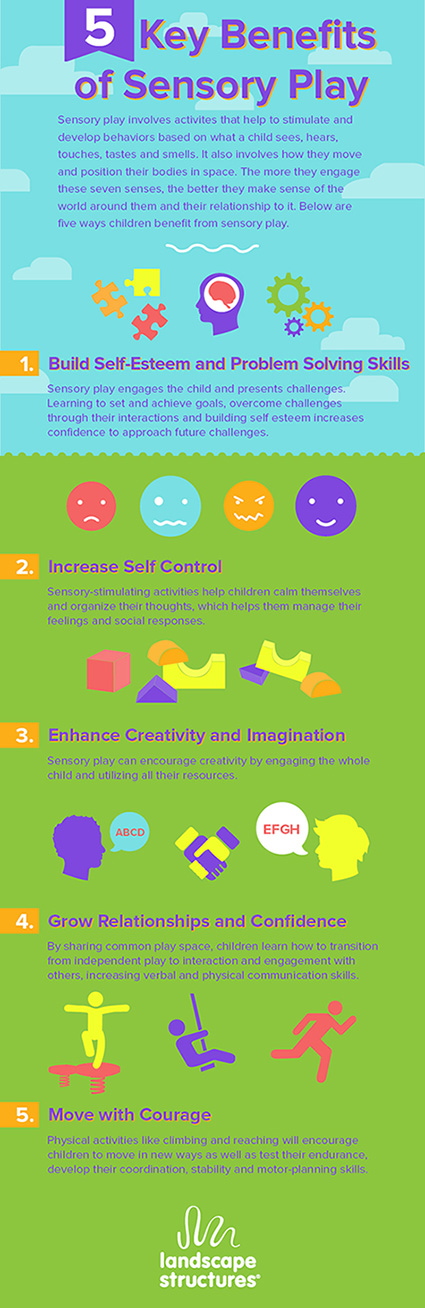
Top: OmniSpin® spinner; Middle Left: Oodle® Swing; Middle Right: Cozy Dome®; Bottom: Sensory Play Center®

To help increase community involvement, we included the M.O.M.S. group and physical therapist from school to help our Kiwanis club create a truly inclusive playground design. While I was thinking wheelchair accessibility, they helped educate our group on the need for sensory play panels, playground spinners and swings, as well as quiet areas where kids with autism or sensory processing disorders can take a “time out” if necessary.

While we move forward finalizing the design, we’re analyzing our site and creating an overall blueprint of the project. We’re also beginning to work more closely with the Iola Parks Department as they will be heavily involved with the installation and maintenance of the playground.

Stay tuned for another update from Michael next month. He’ll talk more in depth about designing an inclusive playground.

Bringing play to schools around the nation

We’re honored to partner with the National Association of Elementary School Principals (NAESP) on their Community Service Day. For the past four years, we’ve worked side-by-side with principals from around the nation to build and beautify school playgrounds in conjunction with the organization’s annual conference.

John Ruhrah Elementary/Middle School, Baltimore, Md.

John Ruhrah Elementary/Middle School, Baltimore, Md.

In July, we worked with NAESP members to install an inclusive playground at John Ruhrah Elementary/Middle School in Baltimore, Md. Principal Mary C. Donnelly said that she thinks the new playground will dramatically increase the use of outdoor grounds for both school instruction as well as recreation. As we completed the playground project with NAESP this year, we thought it would be fun to look back at the other schools we’ve helped over the years.

Hawthorne Elementary School, Seattle, Wash.

Hawthorne Elementary School, Seattle, Wash.

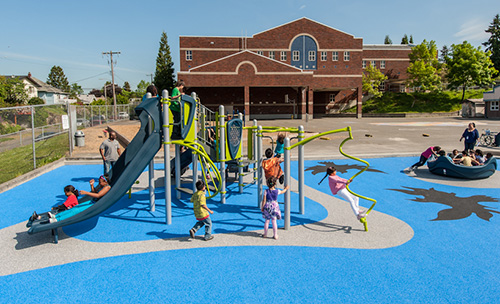
Principals congregated at Seattle’s Hawthorne Elementary School in March 2012 to build an inclusive playground. In just a few hours, the inclusive PlayBooster® playstructure was installed, allowing the principals to network with each other and interact with Hawthorne Elementary students.

Booker T. Washington Elementary School, Tampa, Fla.

Booker T. Washington Elementary School, Tampa, Fla.

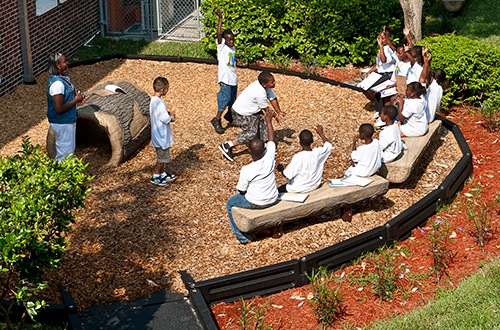
In April 2011, we created a nature-inspired outdoor learning environment for Booker T. Washington Elementary School in Tampa, Fla. Now more than two years later, Principal Toynita Martinez says the outdoor classroom concept is being embraced. “All of our teachers are taking advantage of the outdoor classroom,” said Martinez. “A lot of math and science classes take place outside. Plus, reading groups disperse in the space to finish a reading assignment and then come together to discuss.”

MacGregor Music and Science Academy, Houston, Texas

MacGregor Music and Science Academy, Houston, Texas

Our first time participating in the NAESP Community Service Day was in 2010. We designed a sensory-rich play space complete with the Sensory Play Center® and Cozy Dome® for students at MacGregor Music and Science Academy in Houston, Texas. “We’re really proud and still excited about the gift that NAESP and Landscape Structures provided,” said Principal Patricia Allen of the playground.

Learn more about our partnership with NAESP, and our joint commitment to enhancing the lives of children and the communities in which they live.

Meet the professional: Dr. Lucy Jane Miller

Dr. Lucy Jane Miller, founder of the SPD Foundation and STAR CenterWe are so honored to work with clients around the world, and we’re constantly learning about their fun and unique projects, obstacles they’ve faced and the innovative solutions they’ve created to overcome challenges. That’s why we’ve created this new feature that spotlights professionals. This week, meet Dr. Lucy Jane Miller, founder of the Sensory Processing Disorder (SPD) Foundation and the STAR Center. Below, you’ll learn how she came to begin her career, and what lead her to start the SPD Foundation.

When I was 16-years-old, I stopped seeing things the way other people do. Literally.

Without contact lenses in my eyes, objects were growing blurrier and blurrier. With contacts in, I could see but my eyes ached until, after several hours, I could hardly bear the pain. Only a few months earlier, I’d been thinking about where to go to college, what to do for the summer and all the other things typical 16-year-old girls think about. Then this one big sensory piece started to fail—my sense of sight—and my whole world shifted. My parents took me to a local ophthalmologist but he brushed aside my complaints. “There’s nothing the matter with her eyes,” he told us. “It’s all in her head.”

I was in college before we solved the mystery of my fading vision. By then, wearing contact lenses for more than a few minutes had become agony and even enormous shapes were fuzzy without them. It was my alarmed freshman roommate who insisted I see a doctor at the school clinic, triggering a series of referrals that finally brought answers and help. I was diagnosed with advanced keratoconus, a disease that distorts the corneas and—without treatment—eventually, leads to blindness.

The diagnosis was grave but it also came as a relief. My vision problems weren’t all in my head after all! The symptoms were real and they had a name. I finally knew what I was fighting and could make a plan for fighting it.

The year was 1971 and the cure for the disease was corneal transplants in both eyes, a procedure only two doctors in the U.S. were qualified to perform. I went on a waiting list for donor corneas, doubling up on classes so I could finish college before my surgery, learning Braille and practicing with a white cane, just in case the cure didn’t work and I lost what was left of my eyesight. A few weeks before graduation, I reached the top of the list for my first transplant. During the two-hour surgery, the old bad right cornea was removed and a new donated cornea was stitched to my eyeball with 16 sutures that would jab my eye and eyelid like teensy relentless needles for the three months after surgery when both my eyes had to be patched.

The operation was a total success, but I felt lost in my carefully maintained darkness. The endless stream of doctors, fellows, residents and medical students who gazed admiringly at my eye murmured, “beautiful, beautiful,” but I didn’t feel beautiful at all. I couldn’t see. I made a mess when I tried to eat. I couldn’t perform basic personal hygiene tasks and, after a lifetime seeing people when I talked, it didn’t feel like communication when I talked in the dark. What’s more, the admiring medical people who visited seemed to care only about my beautiful new eye. I felt reduced to a single sensory organ—an eyeball.

Then a new person entered my life. She was a young occupational therapy student doing her internship and she had been assigned to teach me how to feed, dress and take care of myself. She was about my age and showed no interest in my eyeball at all. Instead, she talked to me, Lucy Jane Miller, and listened to what I said. She always wanted to know how I—not my eye—was doing and she told me little things about her life so we had a real relationship even though I couldn’t see her. I silently called her “Angel” and imagined her with long blonde hair, blue eyes, a perfect Olympian body, and a halo, of course. I learned to identify her footsteps and detect her scent so I could say, “Hi, Angel!” just as she came into my room.

Then came the day when Angel chanced into the room when my patches were being changed and I finally glimpsed my rescuer with my eyes as well as with my other senses. The sight astonished me. Angel was a polio survivor. Half her face and body had been paralyzed and left sagging by the disease. In my darkness, Angel was beautiful because I could only “see” the beauty that was inside.

In the fog of recuperation, my future came into focus. While still in my eye patches, I applied to occupational therapy school. Two days after the last stitches were removed following my second transplant, I started graduate school.

One of the first books I read with my new good eyes was the work of a pioneering occupational therapist and neuroscientist named A. Jean Ayres. In Sensory Integration and Learning Disabilities, Dr. Ayres wrote in detail about the behavioral, social and emotional issues that arise when a child’s sensory foundation is not firmly established early in life. She stressed the importance of early diagnosis of sensory disorders and described in detail how occupational therapy (OT) could and was helping children. Fresh as I was from my own darkness, Dr. Ayres’ words resonated instantly.

Demoralized and disabled by the long-term repercussions of a doctor’s proclamation that my symptoms were all in my head, I knew how critical accurate and early diagnosis was. Barely out of my teens, I had known the humiliation of being unable to perform normal, everyday routines like other people my age. Grateful for Angel’s care, I was a firm believer in how dramatically OT could address sensory issues and improve a person’s life. Before first semester ended, I decided to spend my life promoting the understanding, accurate diagnosis and effective treatment of the sensory-based disorders that Dr. Ayres described.

From Sensational Kids: Hope and Help for Children with Sensory Processing Disorder (SPD)

Learn more about Dr. Miller and the research, education and treatment she provides to help individuals struggling with SPD. Then read about our partnership with the SPD Foundation and the STAR Center, including its sensory playground.

Dr. Miller created an inclusive playground with many sensory-rich activities at the STAR Center.

Guest Blog: Securing funds for our inclusive playground

In June, we awarded the Iola Kiwanis club in Iola, Kan., $25,000 in playground equipment as part of the Make a Difference Through Play contest. Since winning, they’ve been busy with plans, and we’re happy to have an update to share from Michael Ford, member of the Iola Kiwanis club and community resource officer for the Iola Police Department.

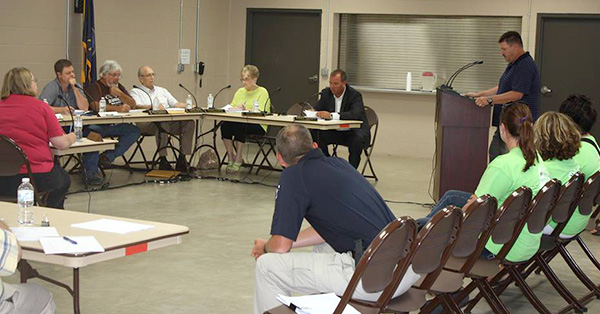
After we were notified that we were the grand prize winners of the Make a Difference Through Play contest, our Kiwanis club met with the city council during open council to tell them about the $25,000 award from Landscape Structures. We took advantage of our time in front of them and also asked if they would consider pledging a matching donation to the inclusive playground. They agreed, which already put us at nearly 30 percent of our fundraising goal.

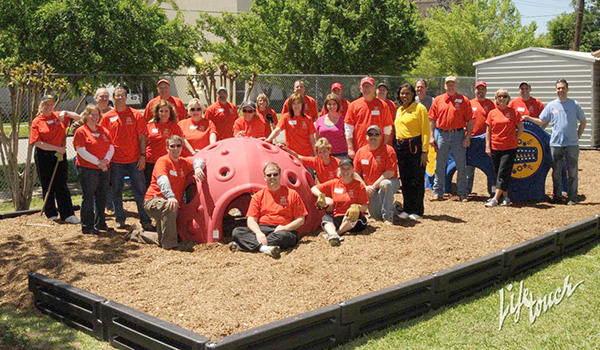
The Iola Kiwanis club asking for a matching $25,000 donation from the City of Iola.

The Iola Kiwanis club asking for a matching $25,000 donation from the City of Iola.

The award and the matching donation had our Kiwanis club energized, and we took that energy to meet with other local businesses to secure funds. The Iola Wal-Mart and a local bank each pledged $5,000, our Kiwanis club has pledged at least $2,500, and we have many more businesses pledging support with donations of anywhere from $500 to $1,500.

We’re working on a couple of grant applications—one through the Kansas Health Foundation and another with KaBOOM!. We also have fundraisers scheduled—a pancake breakfast, concessions at Farm City Days in Iola—with businesses pledging matching funds. Additionally, local construction companies have offered to donate materials when it comes time for the playground installation.

Iola is a city of 5,600 people. When you’re in a town this size, the community members know what’s happening in town. So while we have reached out to many businesses for donations, many have also approached us. We are trying to broaden our reach with a county-wide mailer to tell businesses and individuals that a fund has been set up through the Allen County Foundation so that they can easily make tax-deductible donations.

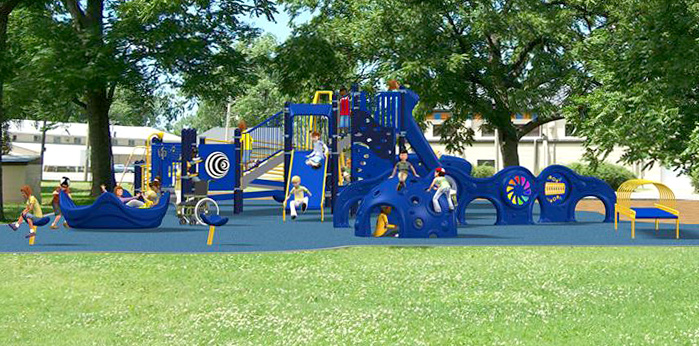
One design option for the Iola Kiwanis club's inclusive playground.

One design option for the Iola Kiwanis club’s inclusive playground.

Another aspect that was unexpected in this process was helping educate the community about planning, funding and installing a playground. Lots of the community members figured that we’d get the $25,000 from Landscape Structures and that would be it. But our vision is for a truly inclusive playground, and we realized quickly that we weren’t willing to cut back on the amount of playground equipment we wanted, and set our budget to meet that dream.

Stay tuned for another update from Michael next month when he’ll discuss getting community support.

Acceptance of all…in a lunch box

As many students and teachers head back to school, it’s important to think about inclusion in the classroom as well as on the playground. Socialization at school can often be struggle for children with special needs, and their isolation may have a damaging effect. That’s why Shane’s Inspiration created the online Inclusion Lunch Box program.

What's in your school's lunch box?

The Inclusion Lunch Box program is an interactive elementary school program that promotes social inclusion and reduces bullying toward children with disabilities. The program works in a simple, three-step process:

  1. Students between grades 3 and 6 participate in a 60-minute ability awareness workshop, during which they use written and hands-on exercises and group discussion to explore common misconceptions and perceptions about disabilities. They learn to distinguish between fact and fiction.
  2. Students with and without special needs are then paired at an inclusive playground to spend the day playing with and learning about each other. Using a variety of toys/games/activities, children of all abilities are supported as they connect.
  3. In a post play date workshop in the classroom, students consider how their perceptions shifted about themselves and people with disabilities. Following the initial program, teachers can continue educating students about ability awareness throughout the year via humanities-based activities.

Help teach your students about inclusion with the online program from Shane's Inspiration.

We support this program of Shane’s Inspiration, and their efforts to make it available to elementary schools throughout North America. The Inclusion Lunch Box program includes step-by-step guides and materials to facilitate classroom and playground workshops, plus a follow-up academic curriculum. Even more, Shane’s Inspiration staff is available for ongoing support to teachers and administrators.

Meet the professional: Bridget Stesney

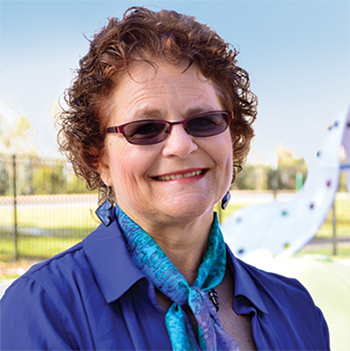
Bridget Stesney is the chief operating officer at DC Department of Parks and Recreation.We are so honored to work with clients around the world, and we’re constantly learning about their fun and unique projects, obstacles they’ve faced and the innovative solutions they’ve created to overcome challenges. That’s why we’ve created this new feature that spotlights professionals. This week, meet Bridget Stesney, chief operating officer at DC Department of Parks and Recreation (DPR).

Q: How long have you been involved in the park and recreation industry?
A: This fall, I will celebrate six years with DPR but I have always had an interest in recreation and the outdoors. I have been a lifeguard, a counselor at summer camps, a program leader at an environmental education center, and a ranger at a Michigan State Park.

Q: What have been some of your favorite initiatives to tackle since moving into parks and recreation?
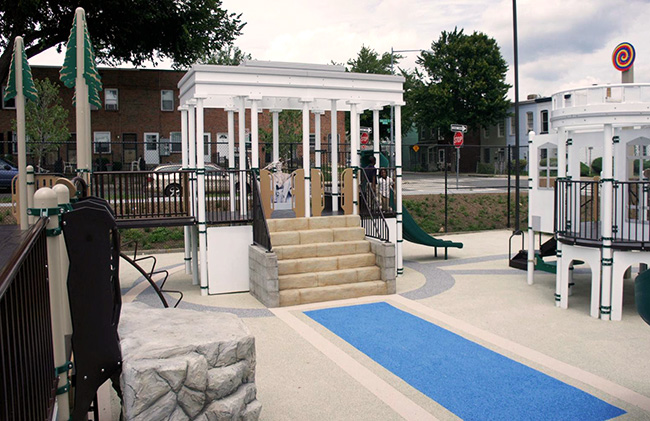
A: In October 2012, we created an initiative called Play DC. The goal of Play DC is to create places for the entire family to be outside, playing together. We’ve set out to renovate 32 playgrounds this year. Kicking off the initiative was the Rosedale Recreation Center. This playground features an inclusive playground mimicking the monuments around the National Mall.

Rosedale Recreation Center (1701 Gales Street NE)

Rosedale Recreation Center (1701 Gales Street NE)

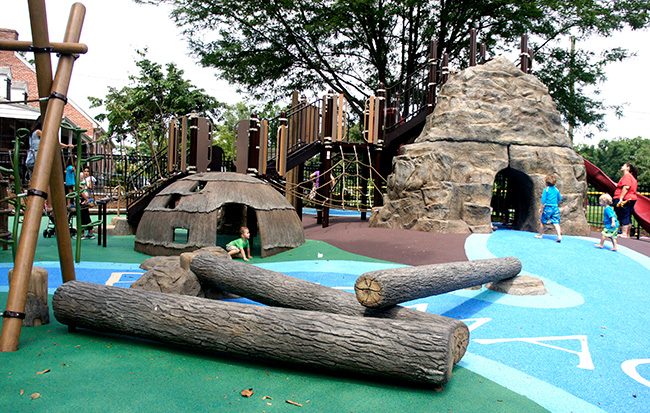
My favorite project at the moment, and that changes daily, is Palisades Recreation Center. We opened that playground on July 4. It has a Native American-themed play structure that pays tribute to the Potomac River settlement. The playground has been packed every day since the opening!

Palisades Recreation Center (5200 Sherrier Place NW)

Palisades Recreation Center (5200 Sherrier Place NW)

We are also incorporating fitness stations in our playgrounds. In one park, we placed fitness stations and play equipment together along a fitness trail in an effort to encourage entire families to be active together.

At eight of our playgrounds, we are also installing new community gardens. This is just another amenity we hope will bring generations together, and it helps encourage healthy living.

Next year, we hope to hire “playground professionals” (the exact job title is still being worked on), who will host play dates at playgrounds around the District and help activate and program our parks and playgrounds.

Q: Being as passionate about parks and recreation as you are, does your career influence some of your personal hobbies?
A: Definitely. I’ve got two little boys—ages 3 and 5—so we’re always looking for new parks and playgrounds to visit. If I hear of a new playground opening nearby, we’ll go visit. And if we’re vacationing somewhere, I try to work in a few visits to playgrounds in the area. It’s fun for the boys, and also helps me in my work to see what other professionals are doing.

Aside from playground visits, we like to go kayaking and hiking, and have started venturing to baseball games. And for a little alone-time recreation, I like to run.

Learn more about DPR and their DC Play initiative here. And be sure to check back to meet more of our amazing clients.