Getting Started
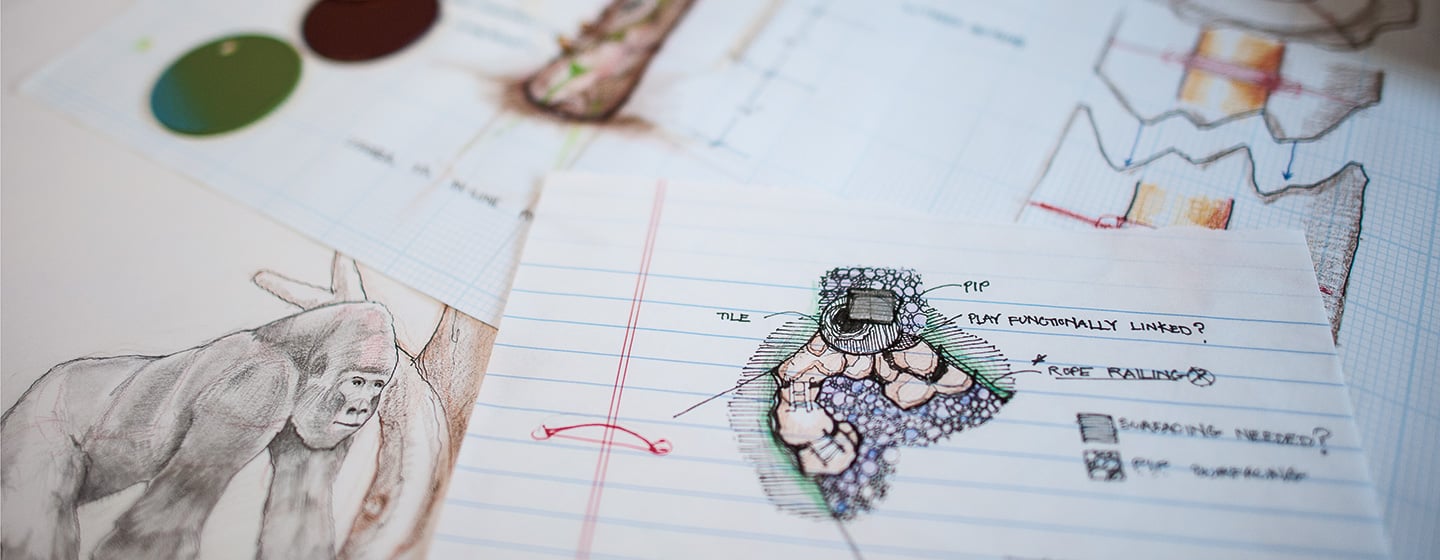
Playground Planning Checklist to Help Create the Ultimate Play Experience
Planning the perfect community or school playground is easy when you have the right tools. Follow these five easy steps to create the ultimate playground for children in your community and beyond.
Envision your Play Area
A great playground will complement your school or community’s unique personality and be a destination for years to come. Work with a landscape architect or your Landscape Structures playground consultant for help in laying out an efficient and exciting design that follows accessibility and safety guidelines to ensure you create a beautiful playground that is safe, fun and comfortable for all visitors. Get started by defining objectives for your play area:
- What ages and abilities will use this play area?
- How many visitors will play at once?
- Are there unique historical characteristics, a color scheme or theme you’d like to incorporate?
- Do you need additional amenities such as shade, benches or waste receptacles?
Analyze your Site
"Bob was extremely helpful and knowledgeable; he made the playground planning process smooth and painless."
The characteristics of your site, including both natural and man-made elements, can greatly impact the design of your playground. Our playground consultants will work with you to analyze your site to make the most of the natural topography, nearby trees and shrubbery, and existing walking paths to create a beautiful play environment. Consider the following when choosing your playground site:
- Will the slope and soil conditions of your site allow for proper drainage?
- Is there existing vegetation that can be incorporated into your design?
- Does your site receive high levels of wind or precipitation, or hot afternoon sun?
- Can the playground be located near existing amenities such as parking, restrooms and walking/biking paths?
Design Your Playground Site
Now that you’ve envisioned your playground and assessed your site, it’s time to create a detailed budget and design a playground that will meet the needs of your community. The Consumer Products Safety Commission (CPSC) recommends separate areas for ages 6 to 23 months, 2- to 5-year-olds and school-age children; consider designing separate play areas for all age groups that may visit your playground. Be sure to consider other design elements:
- Do you want your playground to have a modern look, mimic the environment or carry out a theme?
- What freestanding play elements will you incorporate?
- Spinners, swings or seesaws?
- How much challenge do you want to incorporate?
- What inclusive elements—ramps, transfer points, sensory play, music—will your design have?
- Do you want to add fitness playground elements in your design?
- Are you designing for future phases so it’s easier to enhance your playground down the road?
Playground products shown in video may not be appropriate for every age group. Playsystems shown in video are for demonstration purposes only. Product configurations may vary.
This video features a brief message from Landscape Structures.
[video: scene fades into a man standing at the entrance of an office building with a bench with garden planters on top. White text at the bottom of the screen reads: Pat Faust Landscape Structures Pres.]
Pat: We’re excited for you to experience play.
[video: Pat walks over to the building door, he opens and walks into the lobby in fast motion. The receptionist jumps up from her seats with her hands raised in the air. Text appears at the bottom of the screen reading: Connie Leffew Play(ful) Receptionist.]
Connie: In a brand-new way!
[video: fast motion past the reception desk into a hallway where pat opens a second door that leads to a bright yellow hallway filled with framed catalog covers. A woman walks toward the camera while holding a catalog. White text appears on the left-hand side of the screen reading: Lynn Pinoniemi VP of Marking Fun.]
Lynn: Because play will always shape us.
[video: fast motion past Lynn to another set of double doors that open on their own into the manufacturing building. Scene fades as the camera panning through the manufacturing work spaces. A man wearing safety glasses steps in from the left side of the screen and walks towards the camera. White text appears at the bottom of the screen reading: Lyle Olberding Playground Excitement Engineer.]
Lyle: Thank you for trusting Landscape Structures.
[video: Lyle keeps walking as the camera pans around the other spaces in fast motion. Fast motion to a welding bay where a welder wearing a large welding hood works on a bridge railing. White text appears at the bottom of the screen as he lifts his helmet. Text reads: Sam Gust Playground Creator.]
Sam: To bring the playground of your dreams to life.
[video: Sam lowers his helmet and begins welding again. Scene fades to black. Landscape Structures logo fades into the center of the screen. The Landscape Structures logo is made of a red ribbon undulating above the white text reading Landscape Structures. White text below that reads: For a better tomorrow we play today.]
Install Your Playground
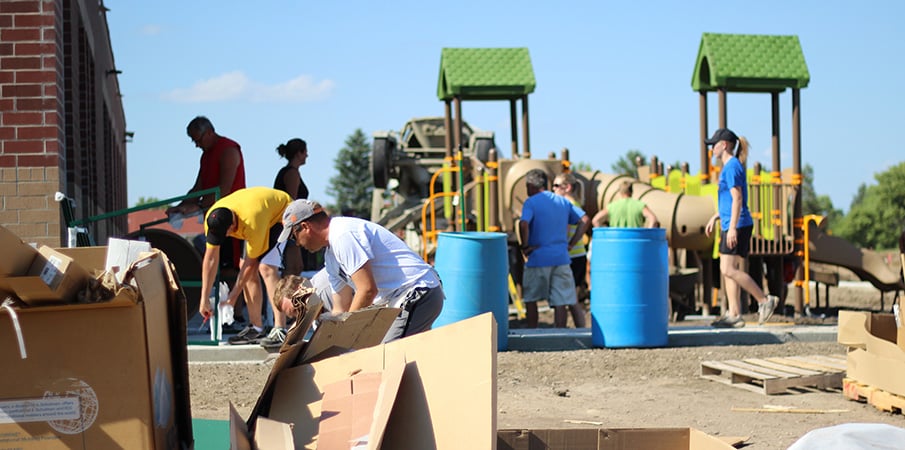
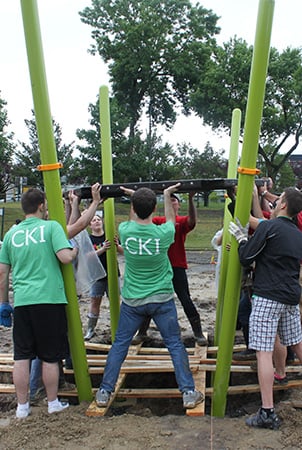
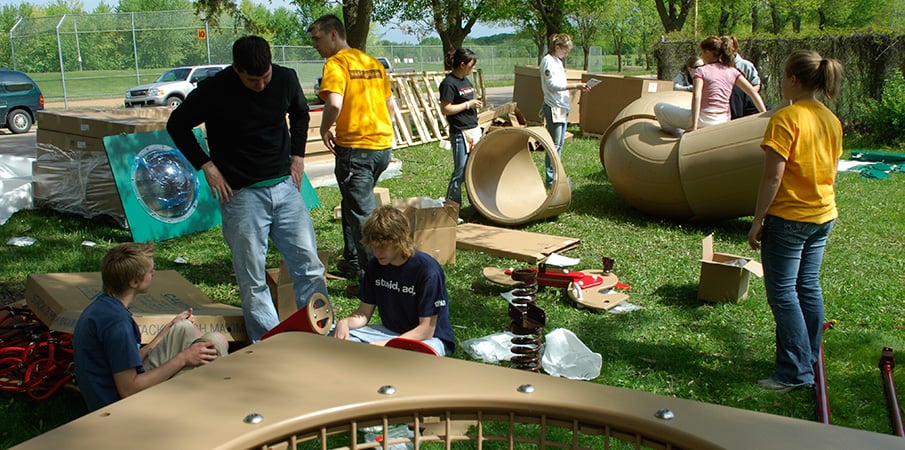
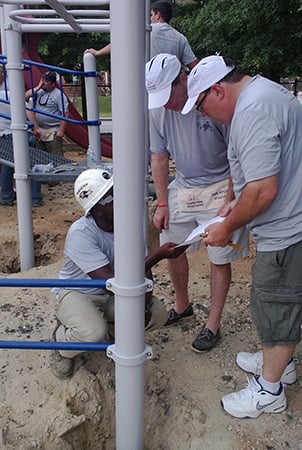
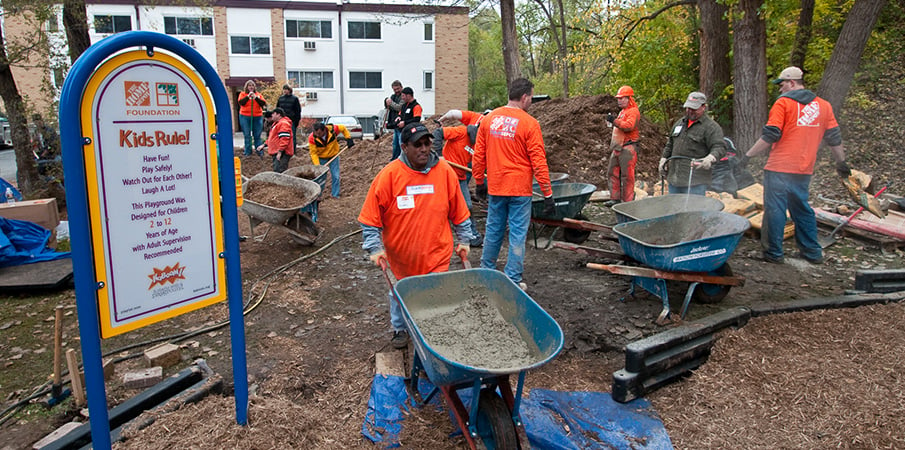
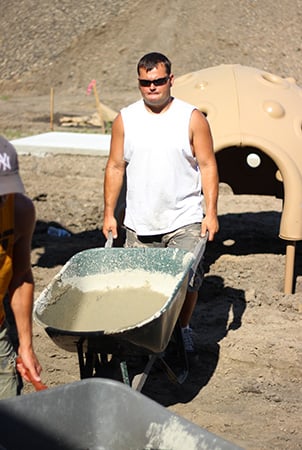
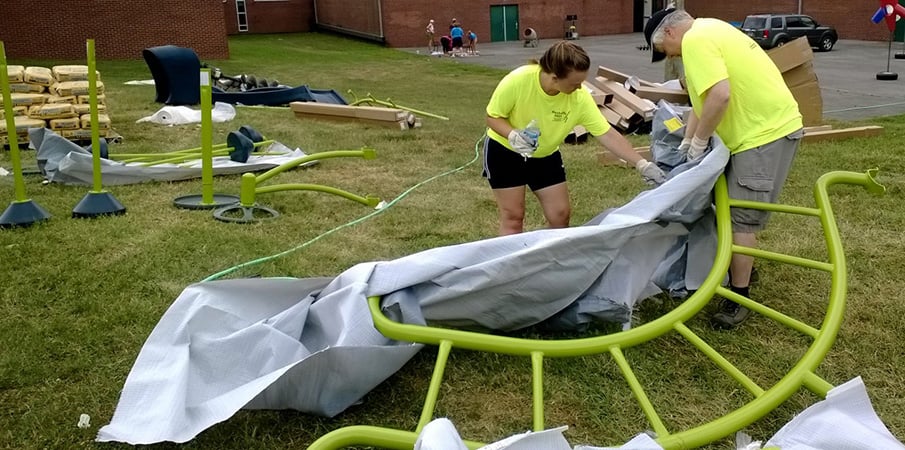
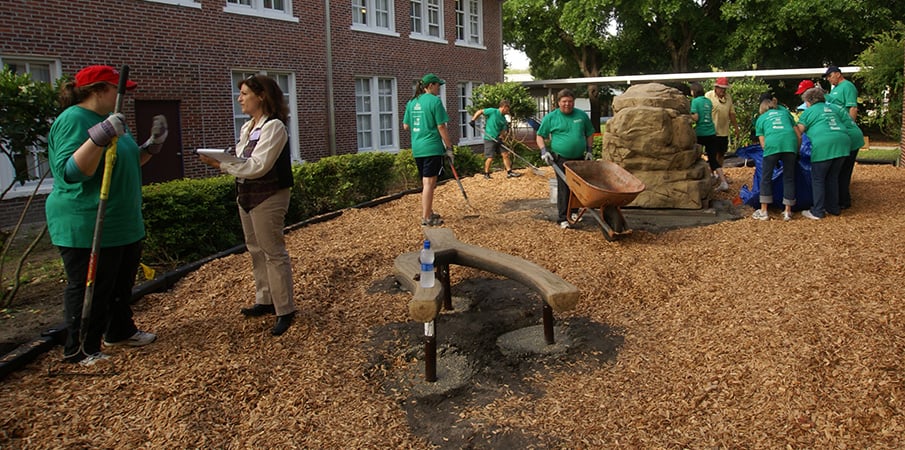
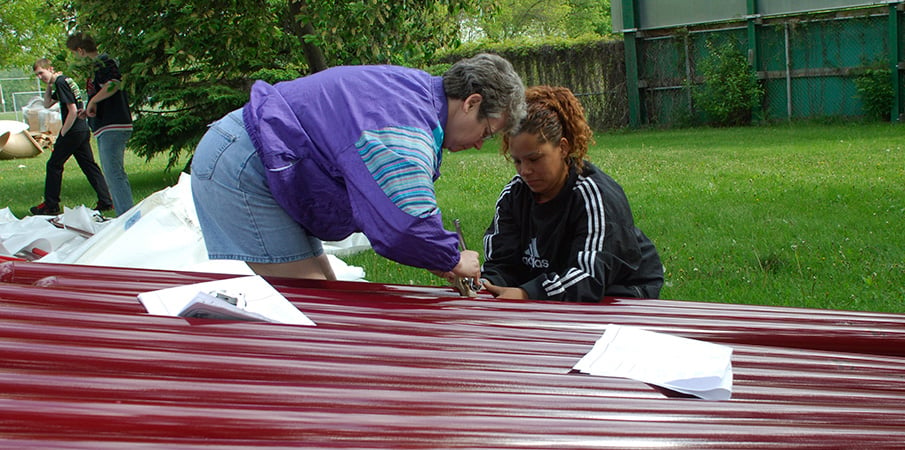
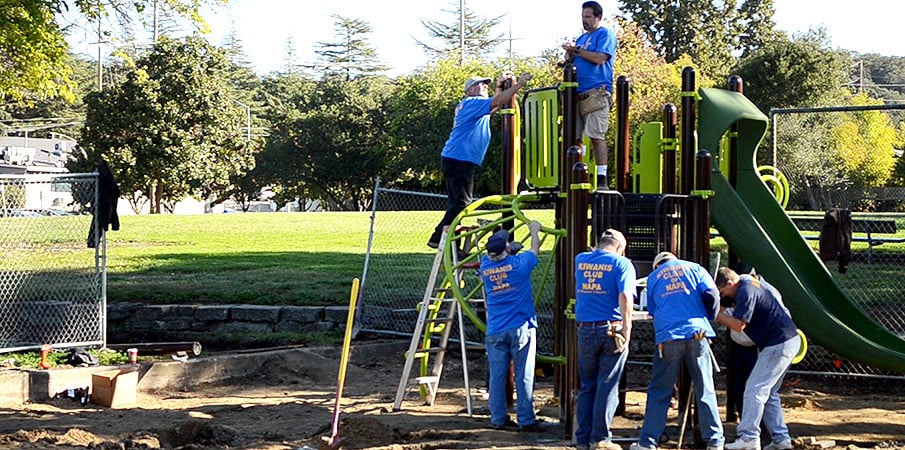
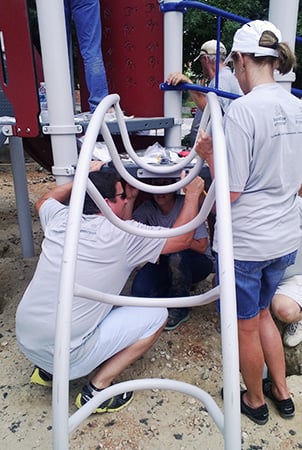
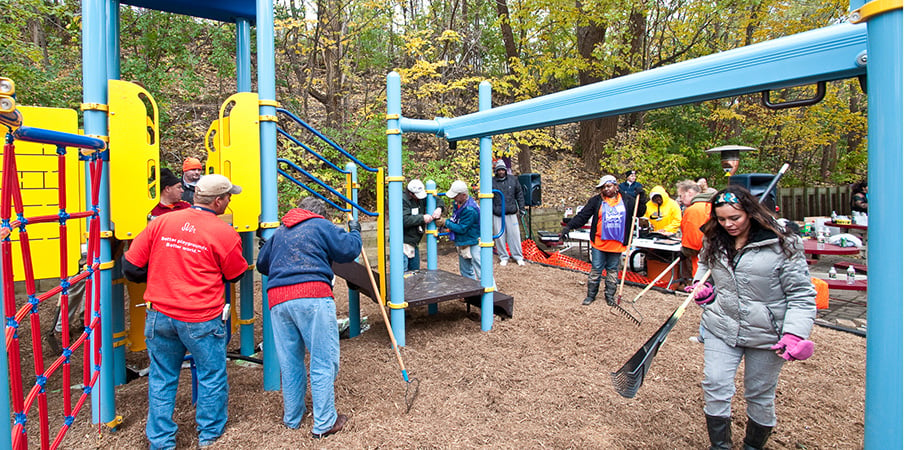
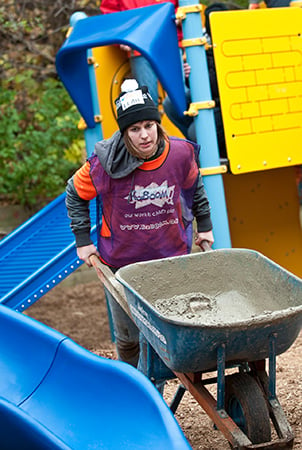
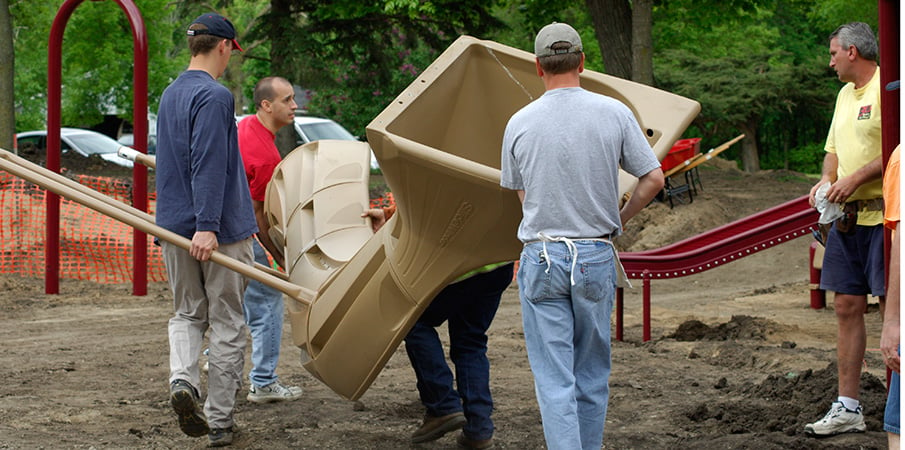
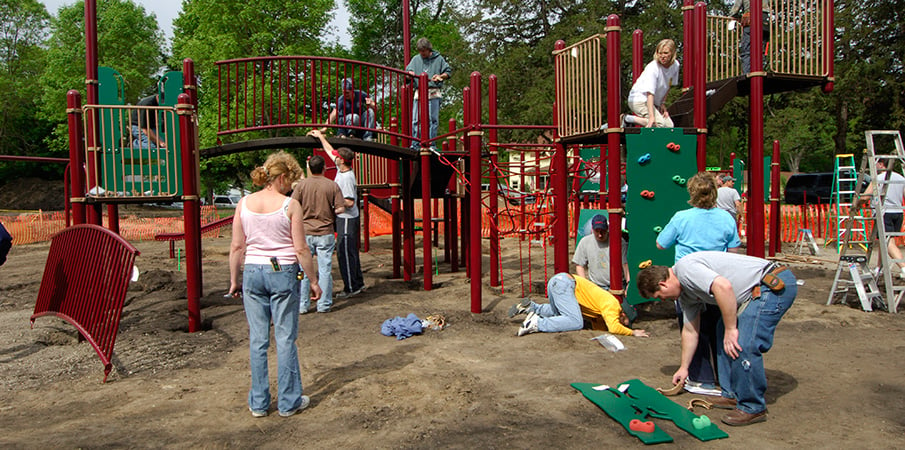
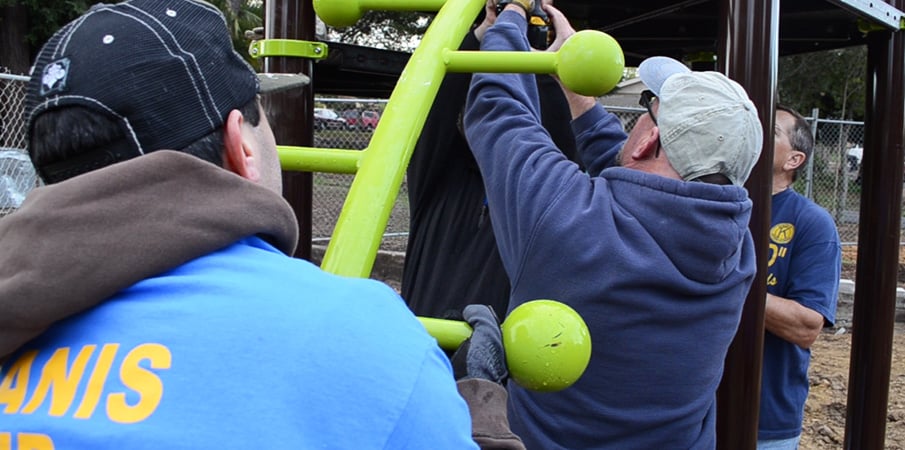
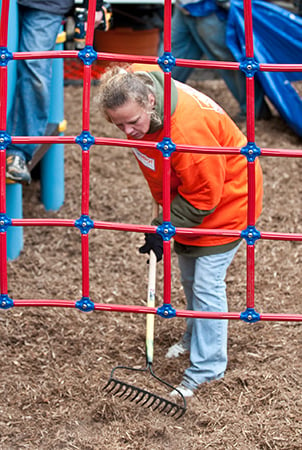
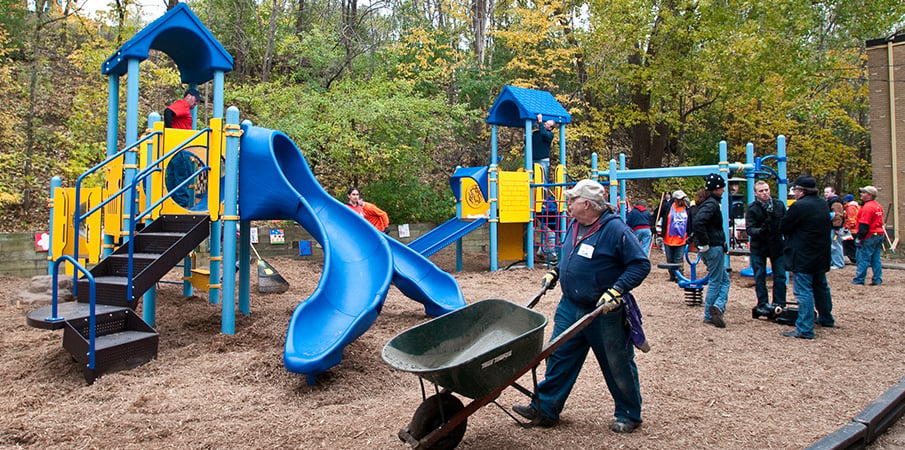
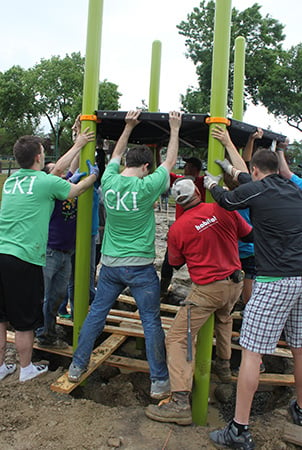
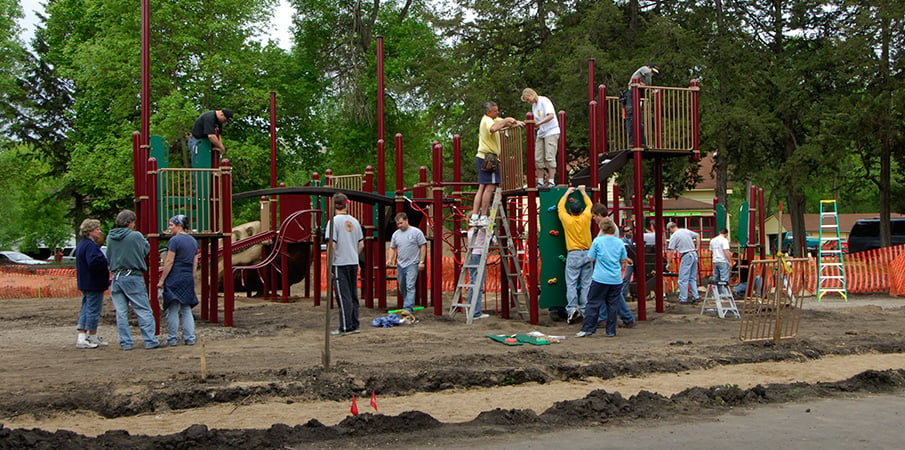
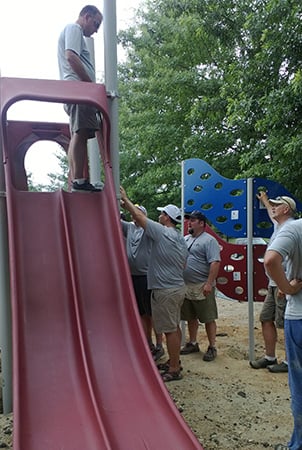
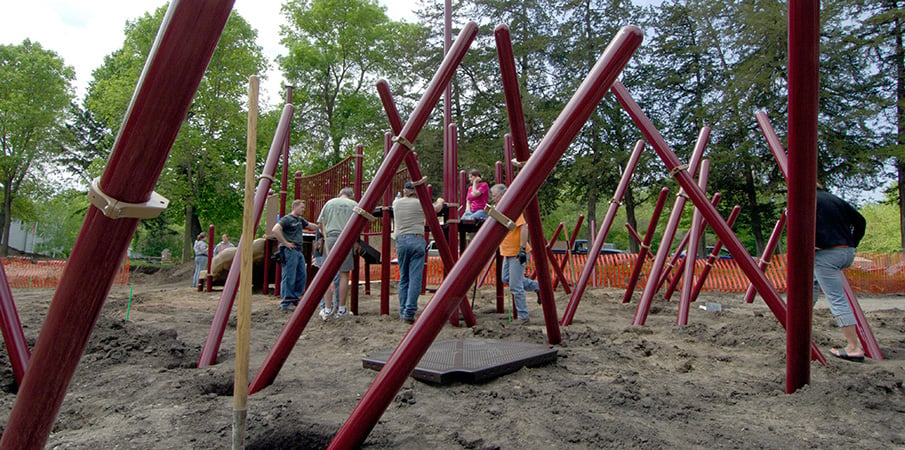
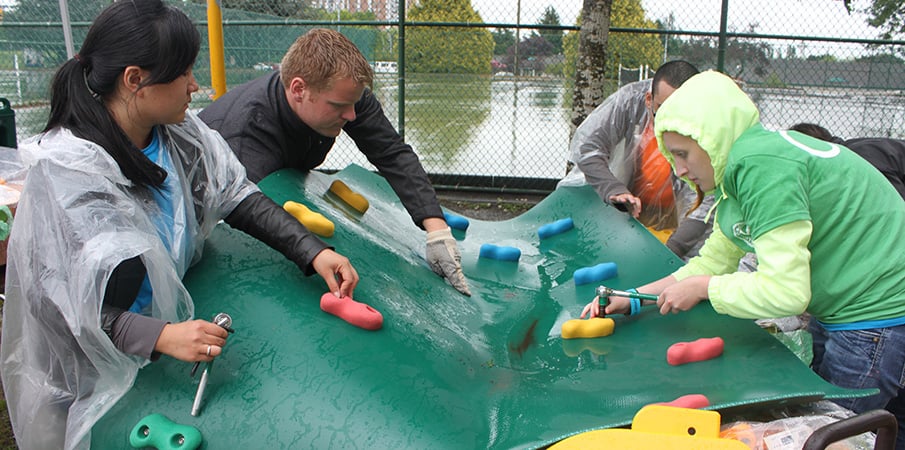
We have choices when it comes to the installation of your playground. You can recruit volunteers to help with the installation, which is supervised by a professional installer. Not only is our community build option exciting, but it helps create a sense of pride and ownership in the new play space. If volunteers are hard to come by, we can send a certified crew to install your playground professionally.
Enjoy and Maintain Your Playground
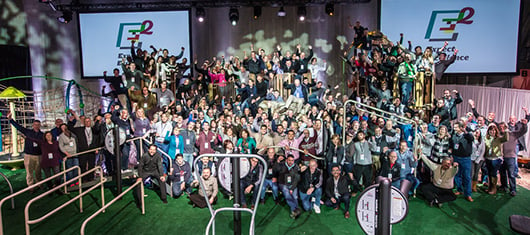 When your playground is ready for public use, host a grand opening party to welcome visitors and thank all those involved in the process. Grand openings are a great way to celebrate all the work that went into creating the new play area. To keep your playground looking great and safe for play, we’ll send you a customized maintenance kit. Ask your playground consultant to determine the frequency of inspections and maintenance needed.
Playground Consultation
We’ve created a global network of local playground experts—with an average of 20 years of experience—who know how to make finding the right playground design easy for you. They’ll learn about your specific needs and priorities, then guide you through every step to make the process as easy as possible. Get started today!


 Oops! The Internet Explorer (IE) browser is no longer supported.