Sensory Playground Equipment
Sensory playgrounds where everyone can be included!
We offer a wide range of sensory playground equipment—from musical installations and educational activity stations to movement-based play experiences and quiet sensory retreats. These freestanding features help transform any play area into a sensory playground where children of all ages, abilities and sensory needs can explore, learn and connect with the world around them.
What is Sensory Play?
Sensory play is any activity that stimulates the senses, including touch, proprioception, vestibular, interoception, sight, hearing, smell and taste. These sensory experiences help children process information, understand their environment and build important developmental skills. A thoughtfully designed sensory playground provides opportunities for children to seek, regulate and respond to sensory input in ways that feel comfortable and meaningful to them.Sensory Play is Inclusive Play
As awareness of sensory processing diversity continues to grow, sensory playground equipment has become an important part of inclusive playground design. Sensory-related disabilities are among the fastest-growing categories of disability among children today, making it increasingly important to create play environments that support a wide range of sensory needs. By incorporating sensory playground equipment throughout a playground, designers can create sensory-diverse spaces where more children feel welcome, engaged and successful in play.Movement and the Senses
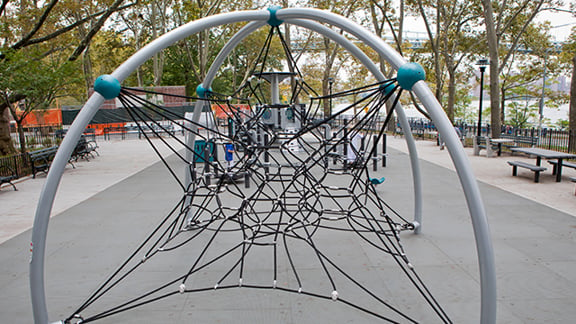
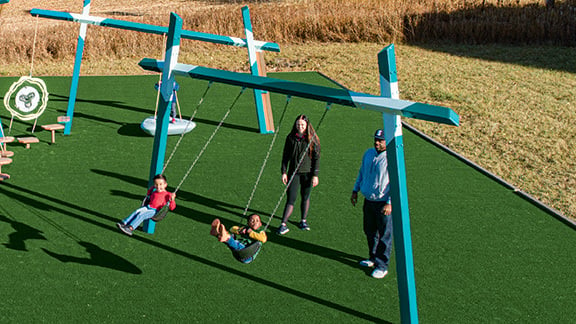
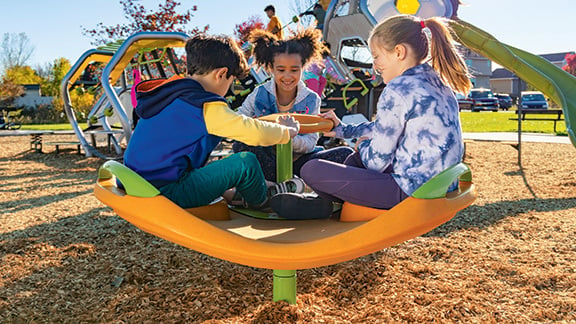
Movement-based play is one of the most effective ways to support sensory development. Commercial climbers provide rich proprioceptive input as children pull, push, balance and navigate their way through challenging routes. Commercial swings deliver valuable vestibular input through rhythmic movement that supports balance, coordination and body awareness. Commercial spinners offer rotational movement experiences that help children develop spatial awareness while providing the sensory stimulation many children actively seek during play.Natural Features and Sensory Play
Nature-inspired sensory experiences can also encourage exploration and discovery. Fossil digs engage children through tactile investigation, imaginative play and hands-on learning. Digging, uncovering and manipulating materials helps develop fine motor skills while providing meaningful sensory feedback through touch and movement. Sand tables and water tables introduce open-ended sensory exploration through texture, temperature, movement and discovery. These experiences encourage experimentation, cooperative play and creative thinking while providing engaging tactile sensory input.The Auditory System
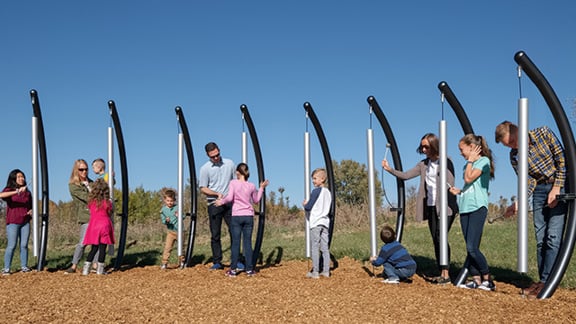
Sound and communication are equally important components of a sensory playground. Rhapsody outdoor musical instruments allow children to experiment with rhythm, tone and cause-and-effect relationships while encouraging creative expression and social interaction. Talk tubes add another layer of sensory engagement by allowing children to communicate across distances, supporting social development, auditory processing and imaginative play.Interoception and Regulation
Many children benefit from opportunities to transition between active and quiet play experiences. Crawl tunnels and the Cozy Dome create enclosed spaces that offer a sense of comfort, security and refuge from overwhelming sensory input. These spaces can support self-regulation while still allowing children to remain connected to the larger play environment.Sensory Play Stations
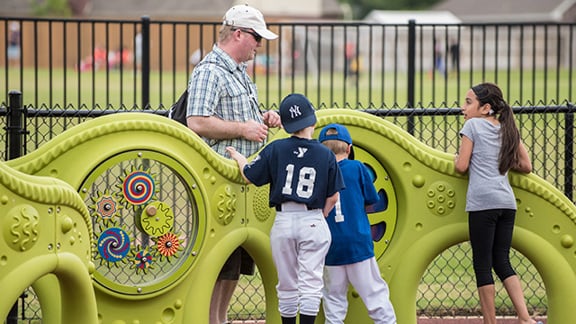
Connected sensory opportunities like the Sensory Play Center provide visual, tactile, auditory and cognitive engagement through spinning elements, manipulatives, sound features, patterns and interactive activities that invite exploration at a child's own pace.Sensory playground equipment isn't simply about accessibility—it's about creating richer play experiences for every child. A well-designed sensory playground helps children develop problem-solving skills, communication abilities, emotional regulation and self-confidence. By incorporating sensory-diverse play opportunities throughout the environment, sensory playground equipment supports inclusive play, meaningful social interaction and healthy childhood development for all.


 Oops! The Internet Explorer (IE) browser is no longer supported.